The workshop
Henri Dejeant works alone, in Béziers, in his family’s former mirror factory. There he draws the forms, makes the moulds, prepares the material, shapes, sands, waxes and assembles every piece. The material, MoldingPulp, is one he invented himself, from newspapers.
Story
From Pézenas to Béziers, by way of Morocco
Childhood
A childhood at flea markets
In Pézenas, he spent his weekends at flea markets with his father, at second-hand fairs, house clearances and furniture museums: Louis XV, Louis XVI, Renaissance, but also 1950s industrial design. His grandfather was an antique dealer. When he was about ten, his father gave him a wooden workbench; it is still in the workshop.
2008
Mirleft, the first workshop
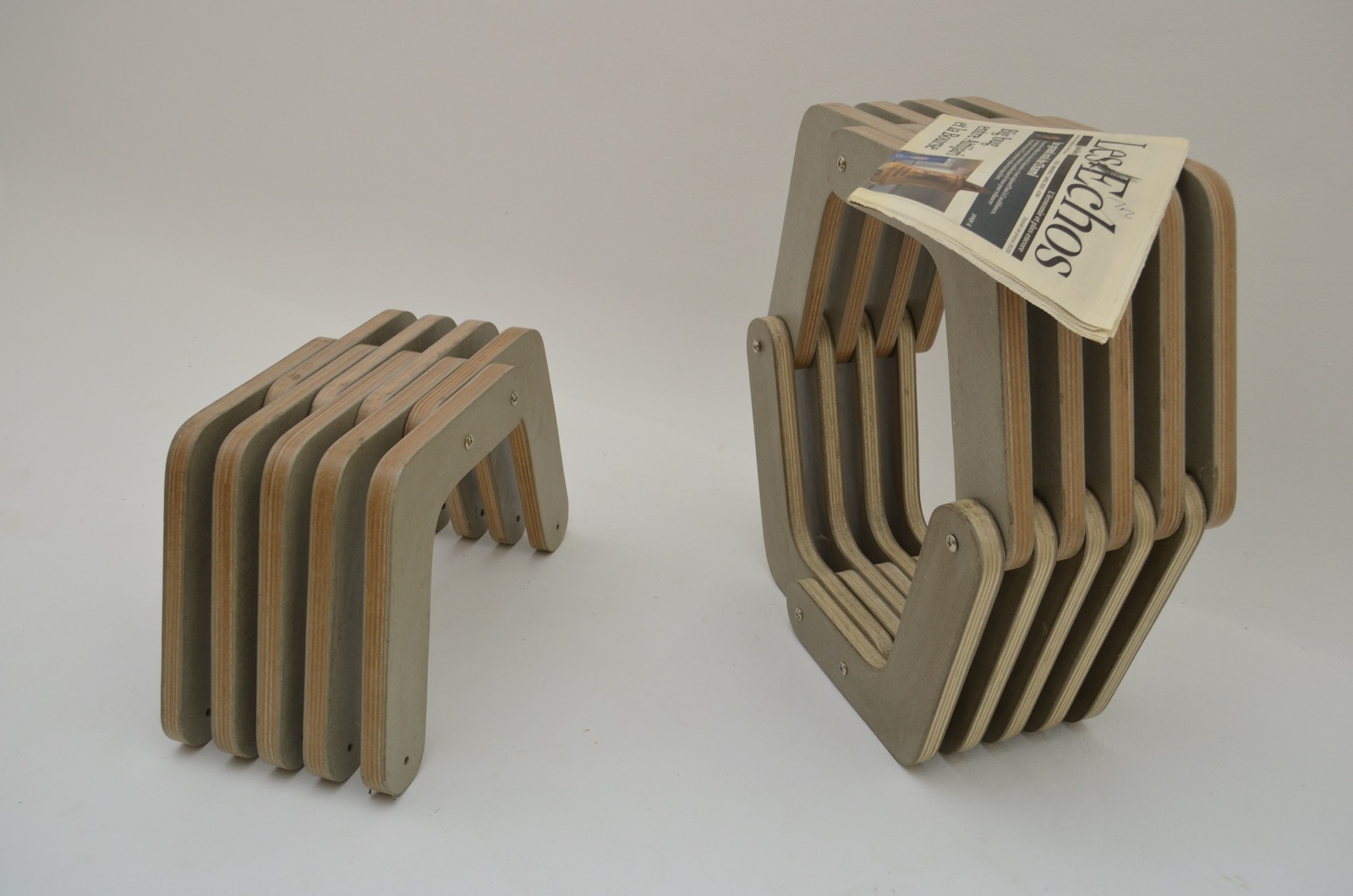
In southern Morocco, he ran a hotel on the beach and rented a small room behind it. There was no tarmac road and no electricity in the streets, but there were newspapers everywhere: he had them ground at the village oil mill. He tried paper plywood, which produced the Boomerang series, then papier-mâché over a reed frame, sanded until it looked like leather.
2010
Marrakech, the recipe
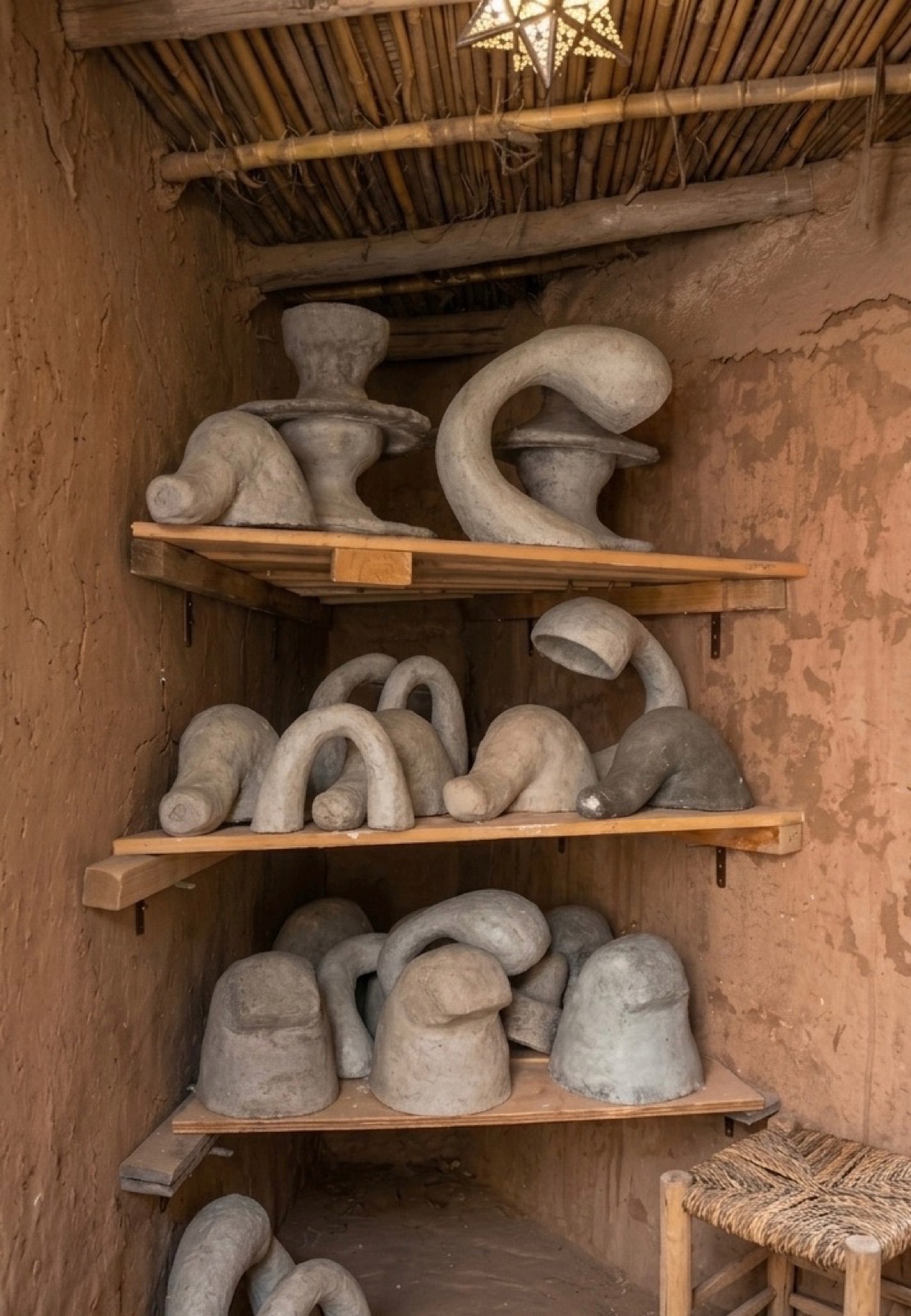
Paper and glue alone warp as they dry. By adding plaster to the paper pulp, he found a strong paste that takes the imprint of a mould perfectly. He learned to make his own silicone moulds, the first ones with dental silicone, and drew the first Invider. They went to Paris, to Fleux and then Merci, to New York, to Breuckelen Berber, and to Los Angeles, to Objet LA NY.
2014
Béziers
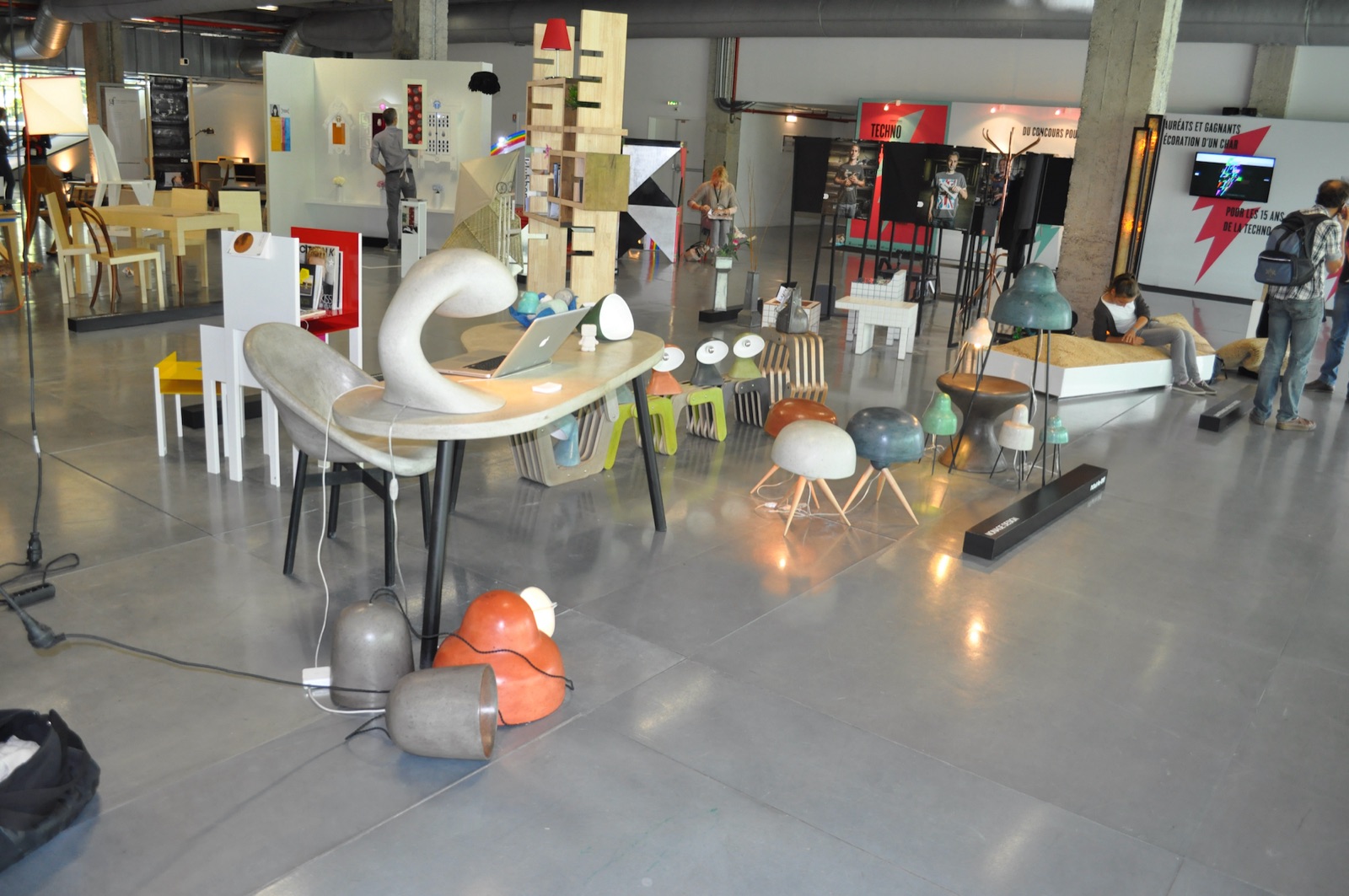
Back in France in 2013, he resumed work in Pézenas, then settled in central Béziers in 2014. His lamps went into Parisian department stores, shops across Europe such as Season in Berlin, and hotels in Paris and the South of France.
2023
The mirror factory
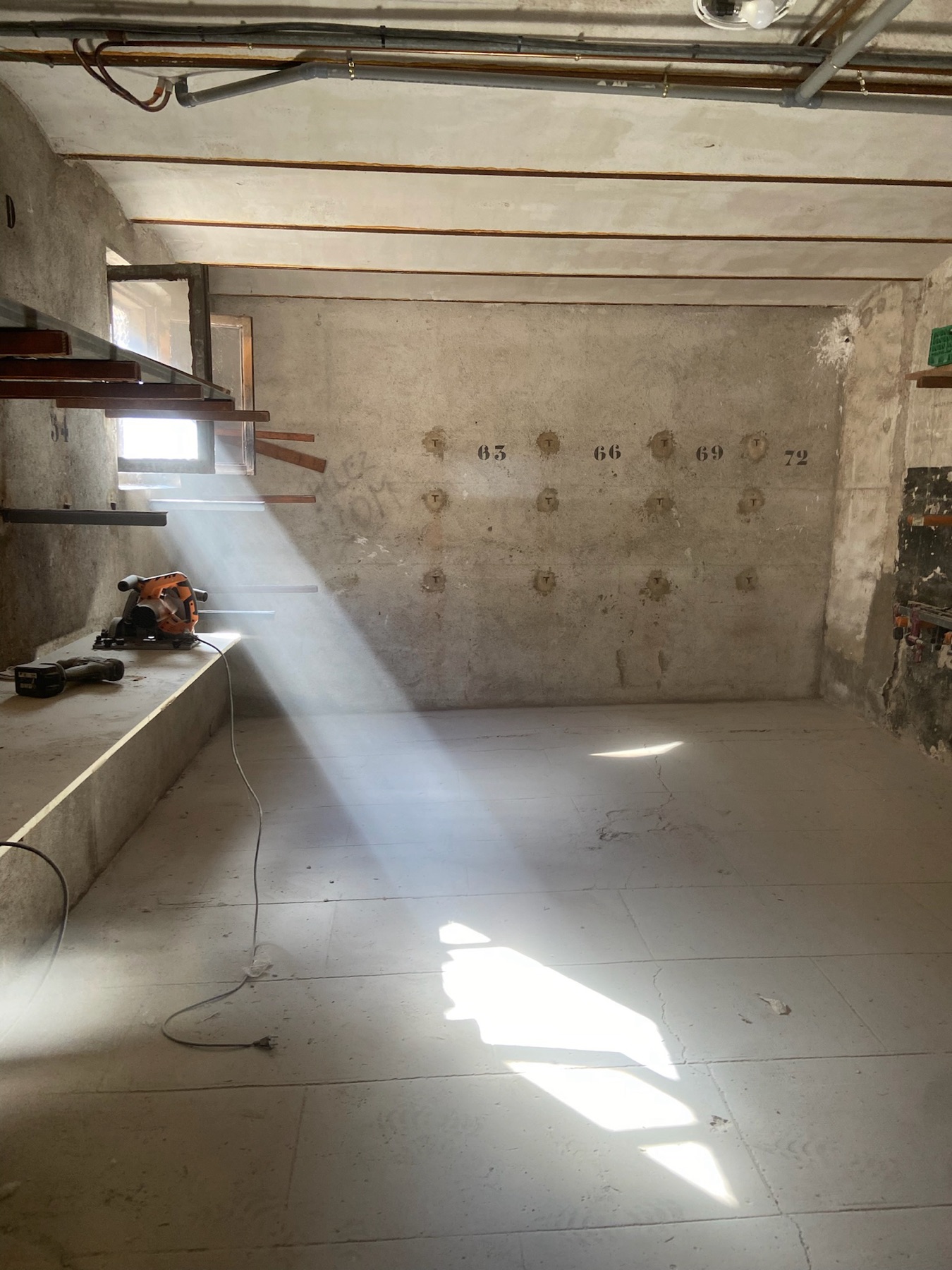
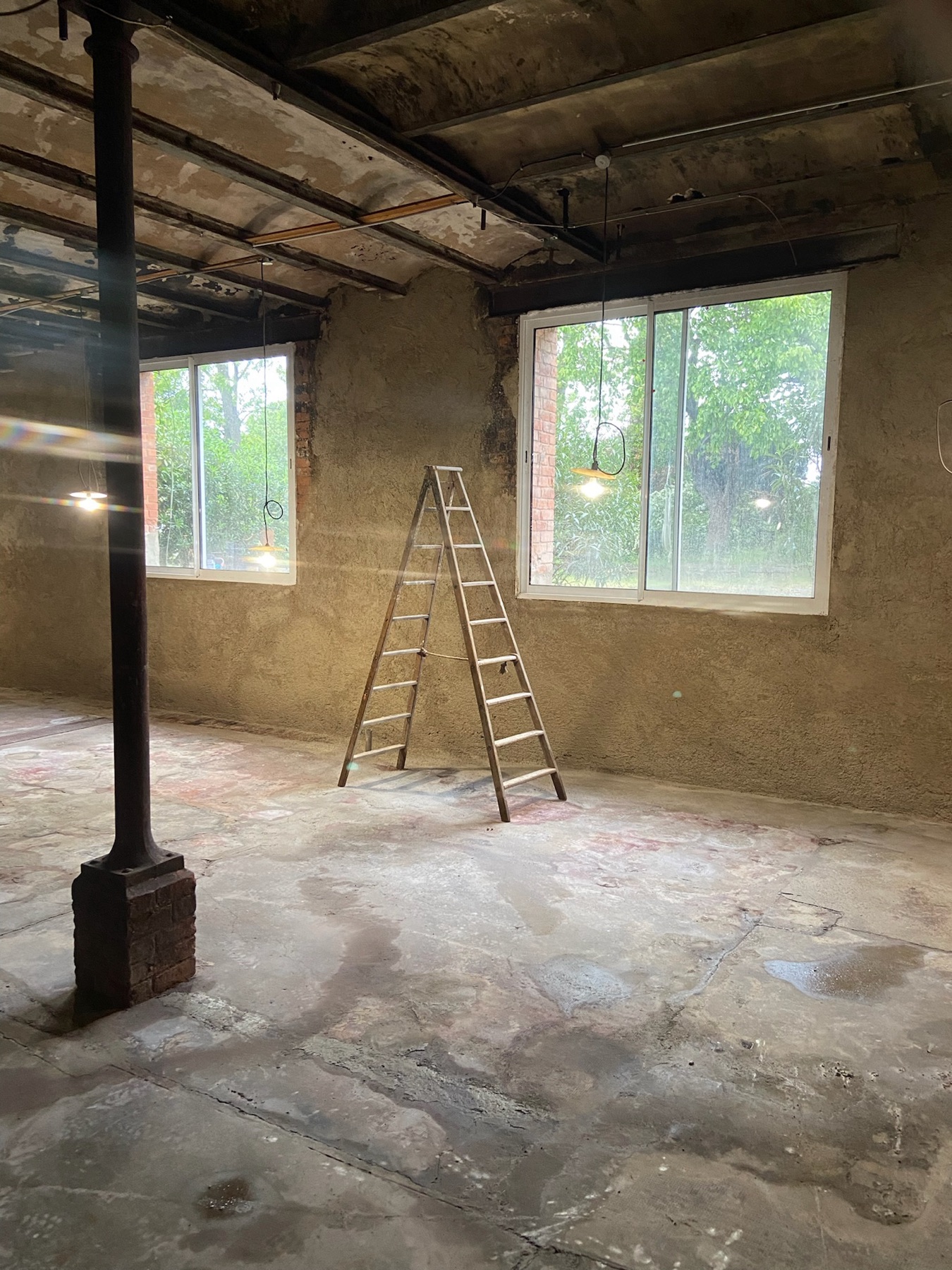
He took over the family mirror factory, founded by his great-great-grandfather in Carcassonne and later moved to Béziers, where hand-painted mirrors and Venetian-style furniture were made. The building still bore the coal marks of the steam engines; he renovated it. It is his fifth workshop, and the first big enough for two-metre pieces.
The material
MoldingPulp
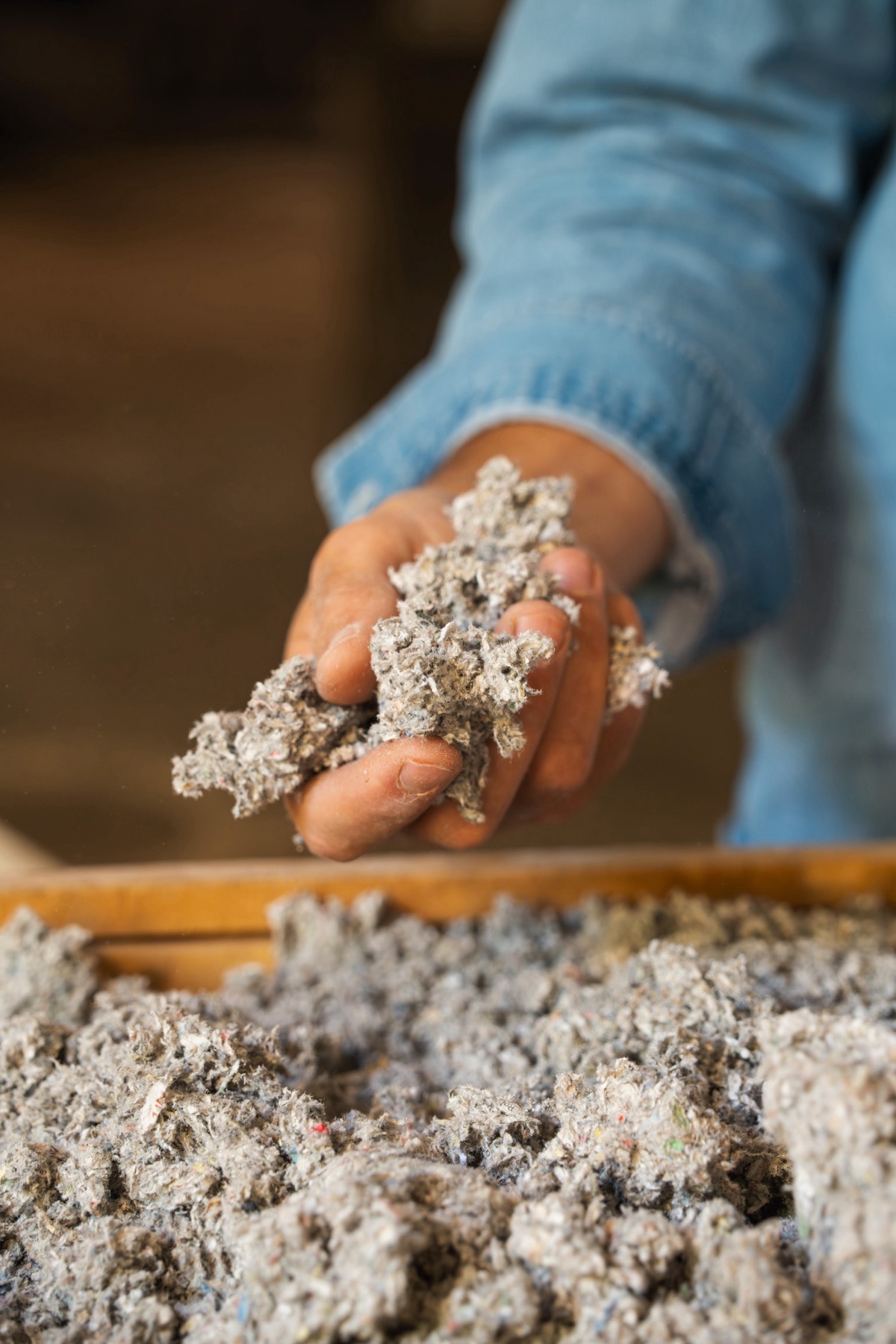
It starts like papier-mâché: newspaper, water, a plant-based glue. Then plaster goes into the pulp and everything changes. The paper fibres reinforce the plaster, the plaster gives strength and weight, and the material holds the shape of the mould faithfully — where paper and glue alone warp as they dry. Henri Dejeant calls this composite, developed in Morocco and refined for more than fifteen years, MoldingPulp. What it really is, in detail.
- Salvaged newspapersdry-ground by a company near Béziers to the grain size that gives the texture
- Plaster made in Francethe mineral binder: it gives the strength and the weight
- Plant-based gluewhich makes the paste workable by hand
- Mineral pigmentsochres, oxides and carbon black, mixed through the mass
- Beeswax, Ecolabel varnishwax to finish the lamps; a water-based varnish certified with the EU Ecolabel for the furniture
No resin, no plastic in the material.
The making
From drawing to wax
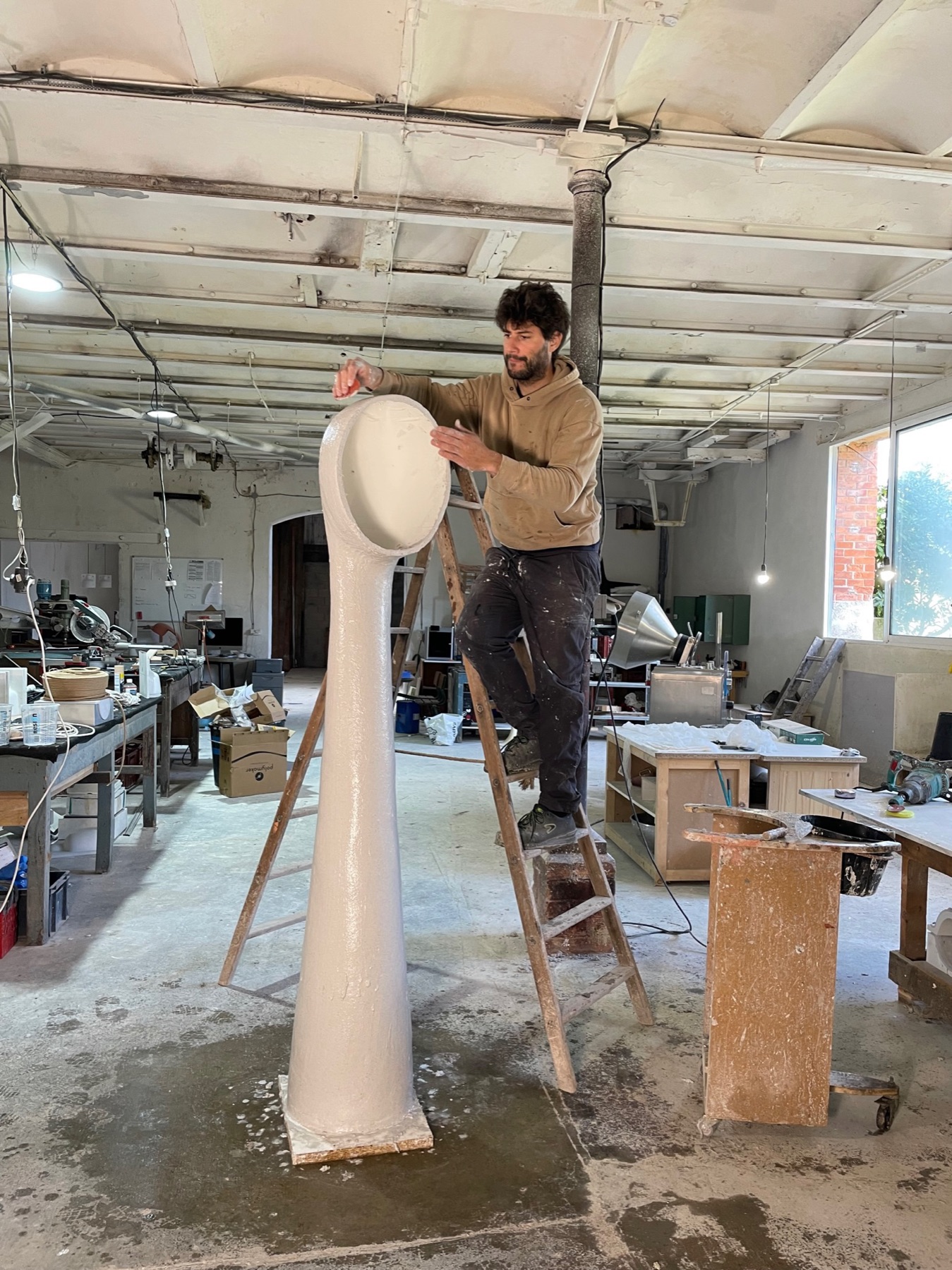
Drawing
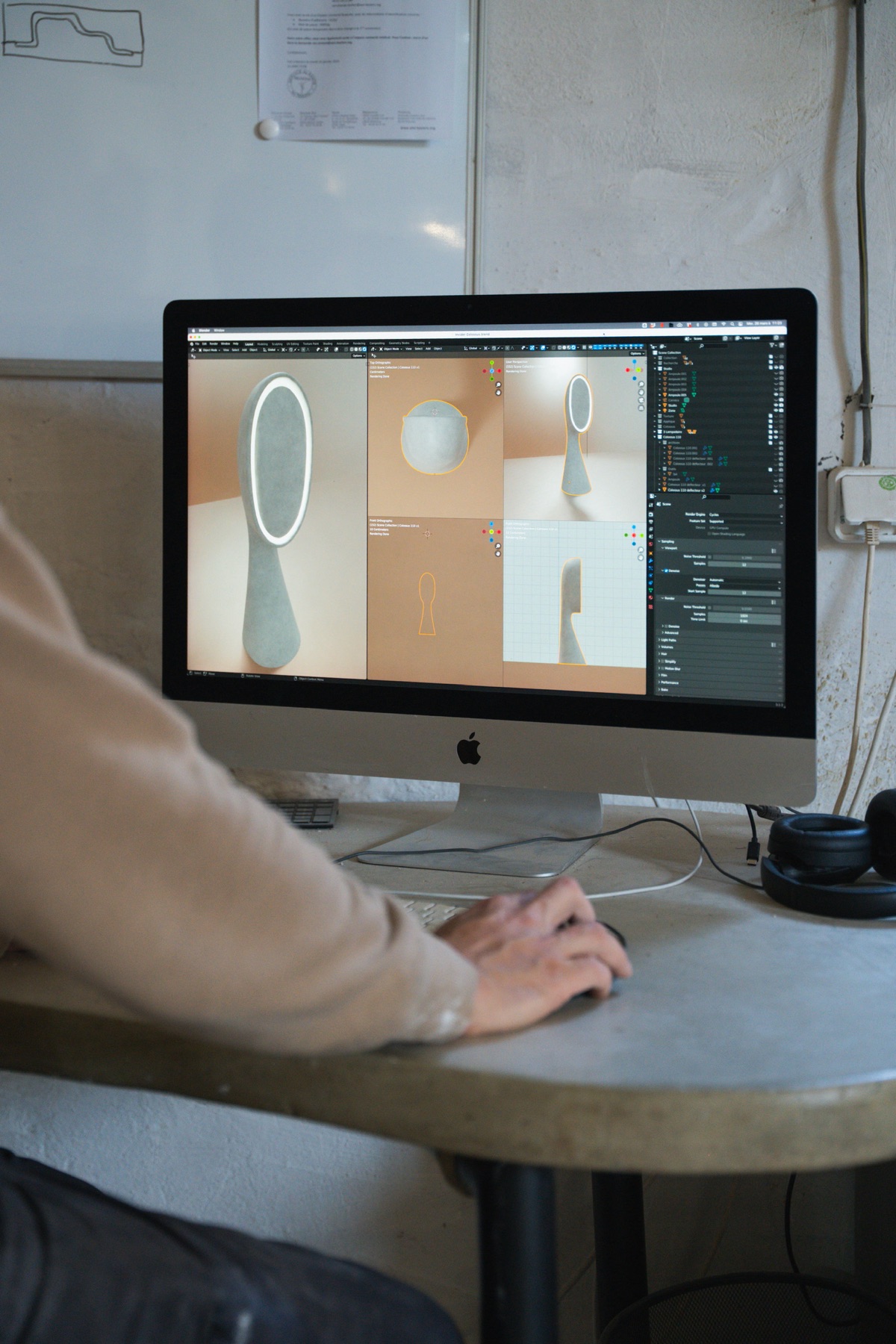
The forms are drawn in Blender, software designed for animation. It allows organic volumes that spread the loads: they are beautiful, and they make the piece stronger. These are forms that are hard to achieve in wood or terracotta.
Moulding
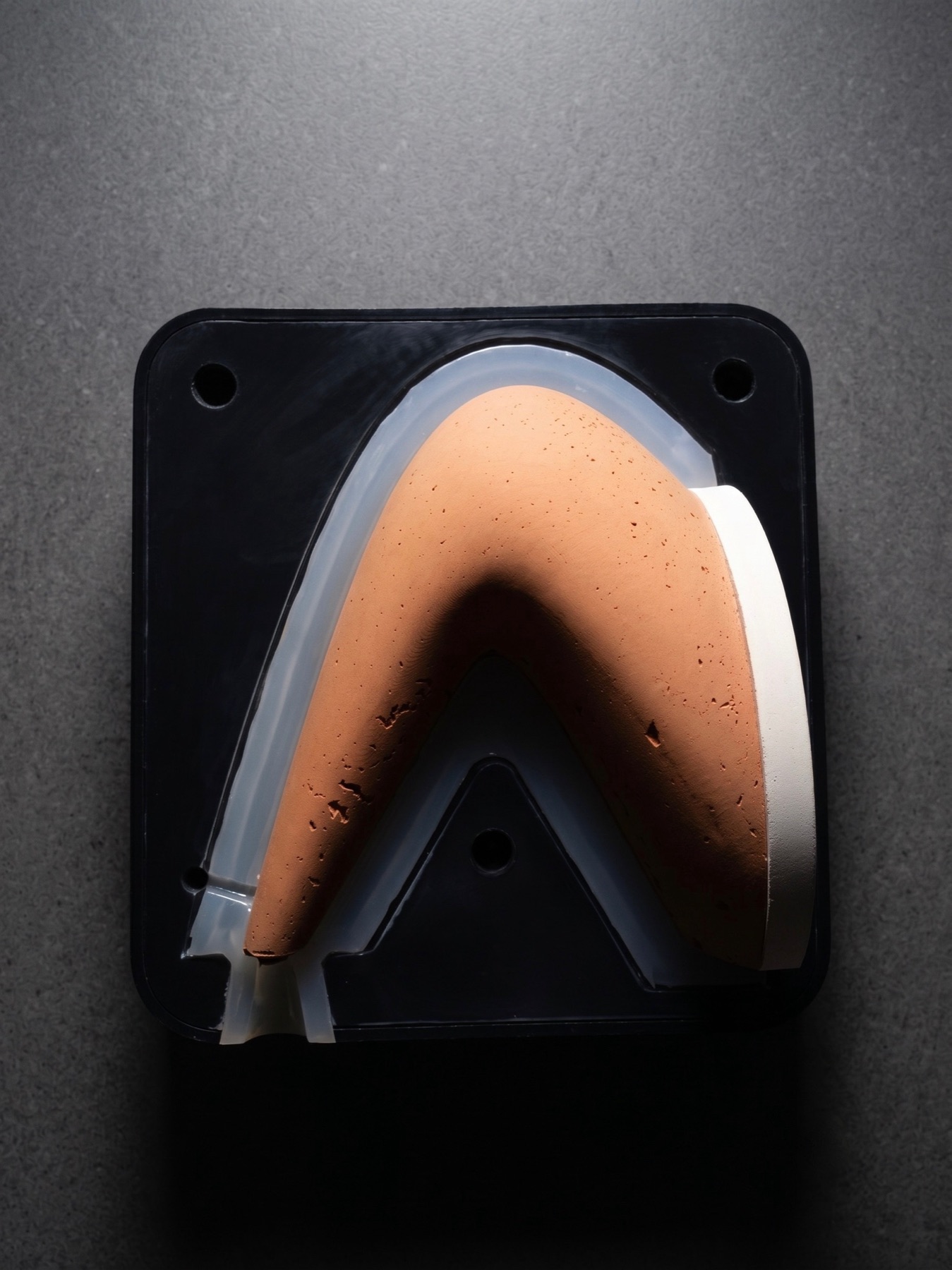
The paste is mixed at the last moment, because it sets fast. It is applied by hand so as not to trap air: inside a mould, over a male mould or over a template, depending on the model.
Drying
Once set, the piece is taken out of the mould and dries in a simply ventilated dryer, using as little energy as possible. It comes out raw.
Sanding, waxing
Sanding reveals a terrazzo grain and flecks of newsprint; the wax brings the colour back while hardening the surface.
3D drawing, template printing, moulds, mechanics, drying: everything is done on site. That is what makes it possible to take on a series for a hotel, a colour for a shop, or work with a design studio on its drawings, with no minimum quantity.
Questions
What people often ask
Is it strong?
Yes. The paper fibres reinforce the plaster: the material absorbs a light knock where plaster alone would crack. Like any handmade object, a lamp may not survive a fall, but it can be handled without special care.
What about water?
A spilt glass is no problem: a soft cotton cloth, damp and well wrung, is enough. The lamps are rated IP21, made for dry rooms. Coffee and wine leave no mark on the varnished furniture.
Over time?
The colour does not change; a patina forms. A small chip can be touched up. A badly damaged piece, however, cannot be made as good as new.
Which colours?
Natural paper and carbon black are permanent. Sage, ivory and brick are the colours of the moment, in limited edition. Any other colour can be prepared on request.
See, visit
See the pieces, visit the workshop
The pieces are shown in some forty shops, in France and abroad. The workshop is closed to the public, but can be visited by appointment. Henri Dejeant sometimes exhibits at Maison&Objet.
Pieces in stock ship within 24 to 48 hours; others are made in 2 to 3 weeks (3 to 5 for the Amba lamps and the Petipié table), and a new piece can take up to three months.
In the notebook: what this material really is, how a lamp is made, a piece drawn for one place.