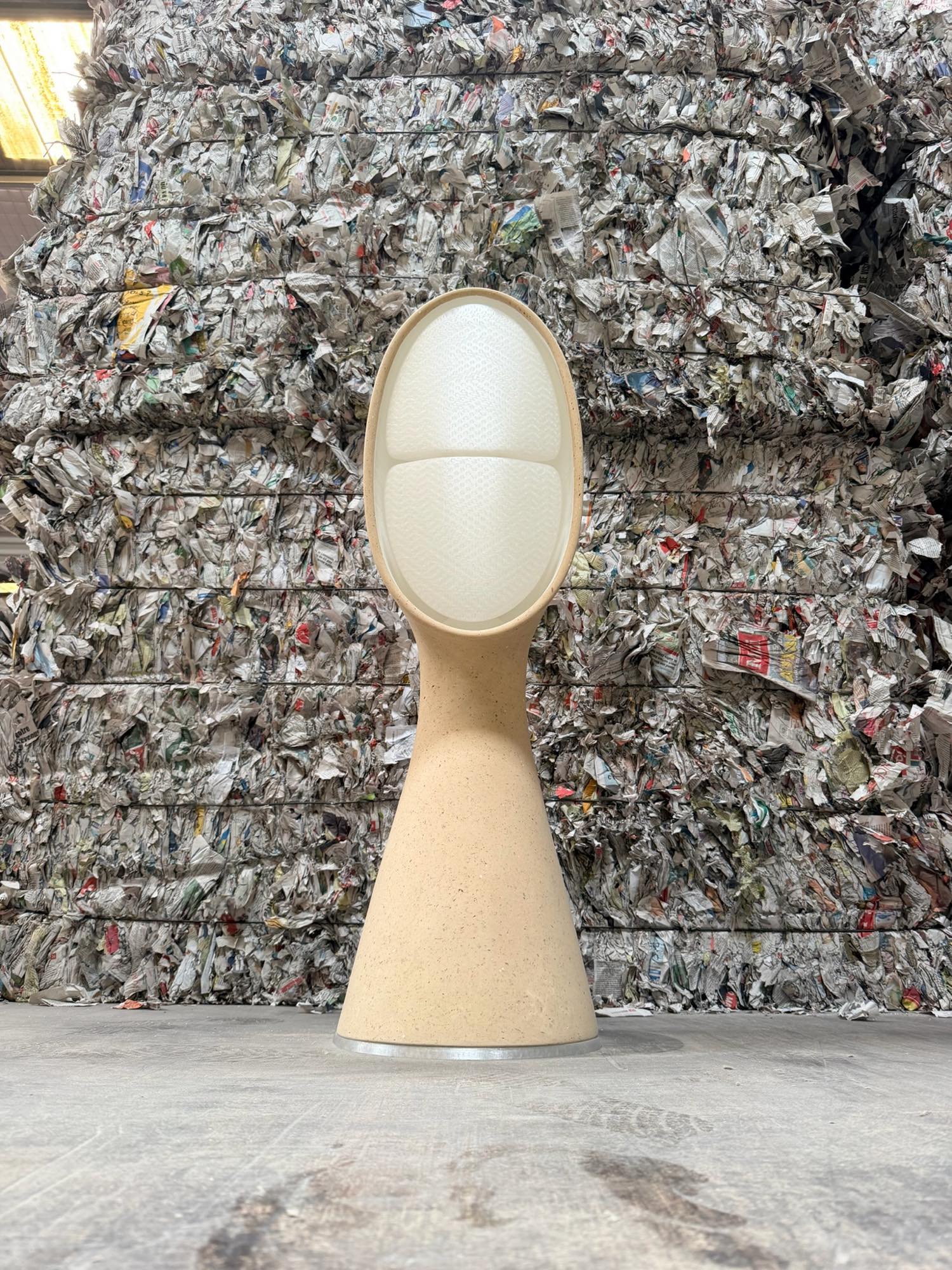
Recycled paper lighting and furniture, handmade in Béziers, France
From paper
to light
Henri Dejeant shapes lamps and furniture from a material he developed himself: recycled newspaper, plaster and a plant-based glue.
“I grind the paper, knead it, and combine it with plaster and plant-based glue to obtain a dense, malleable, tactile material.”
It all began in 2008 in Mirleft, in southern Morocco. No paved road, no street lighting, but newspapers everywhere. Henri Dejeant had them ground at the village olive mill and spent years working out how to turn them into a material.
After Mirleft, Marrakech and Pézenas, he sets up his workshop in Béziers, in his family’s former mirror factory. He draws, moulds, sands and assembles every piece there.
His story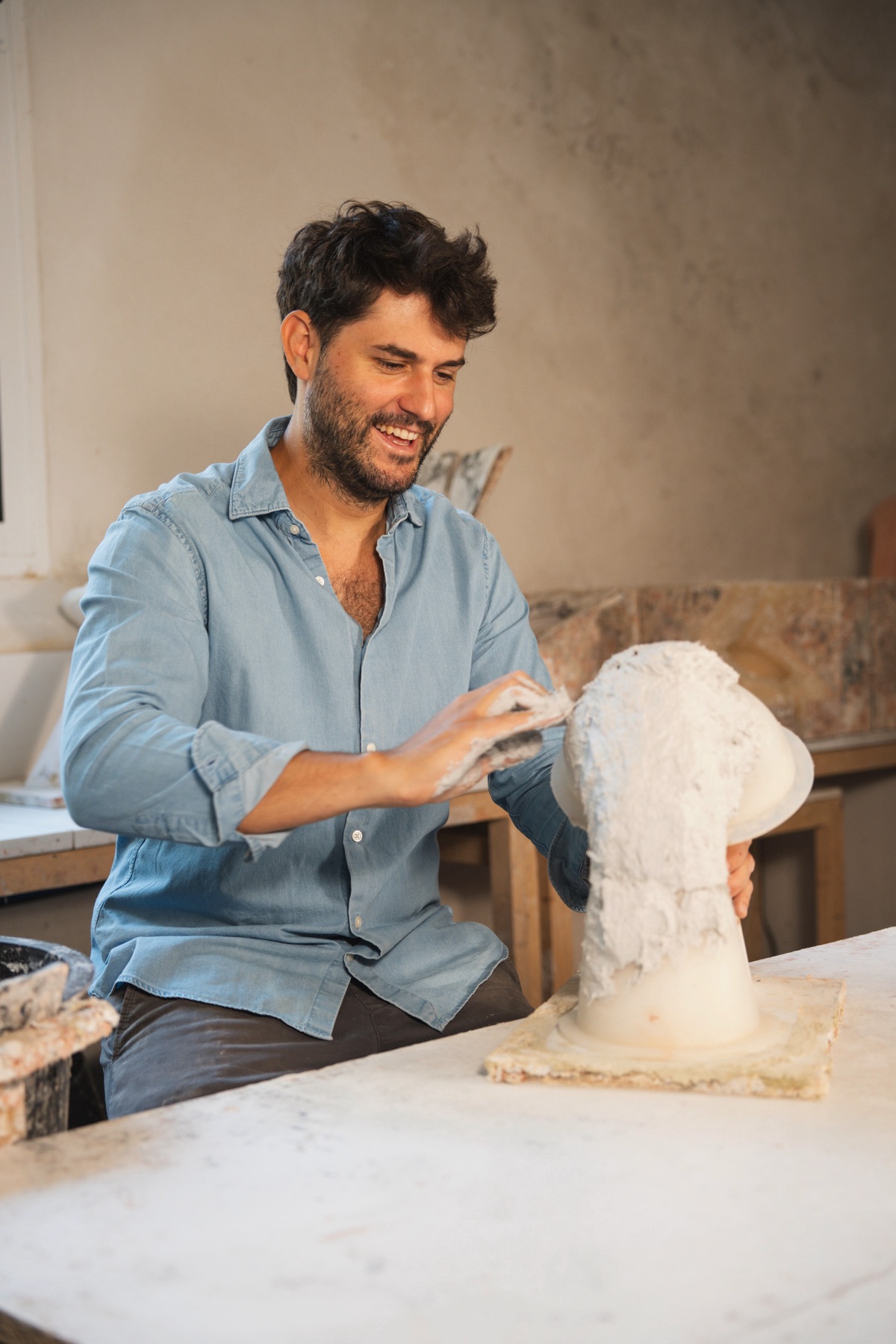
Hand application
Hand-shaped lamps
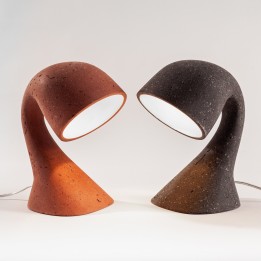
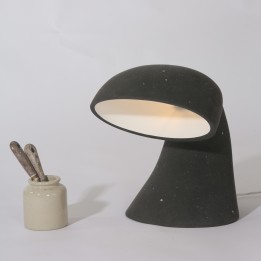
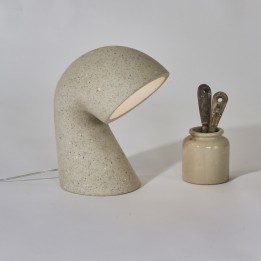
Lamps with organic shapes that seem alive. Four members of one family, the Invider, and two ways of working the paper pulp.
See the Invider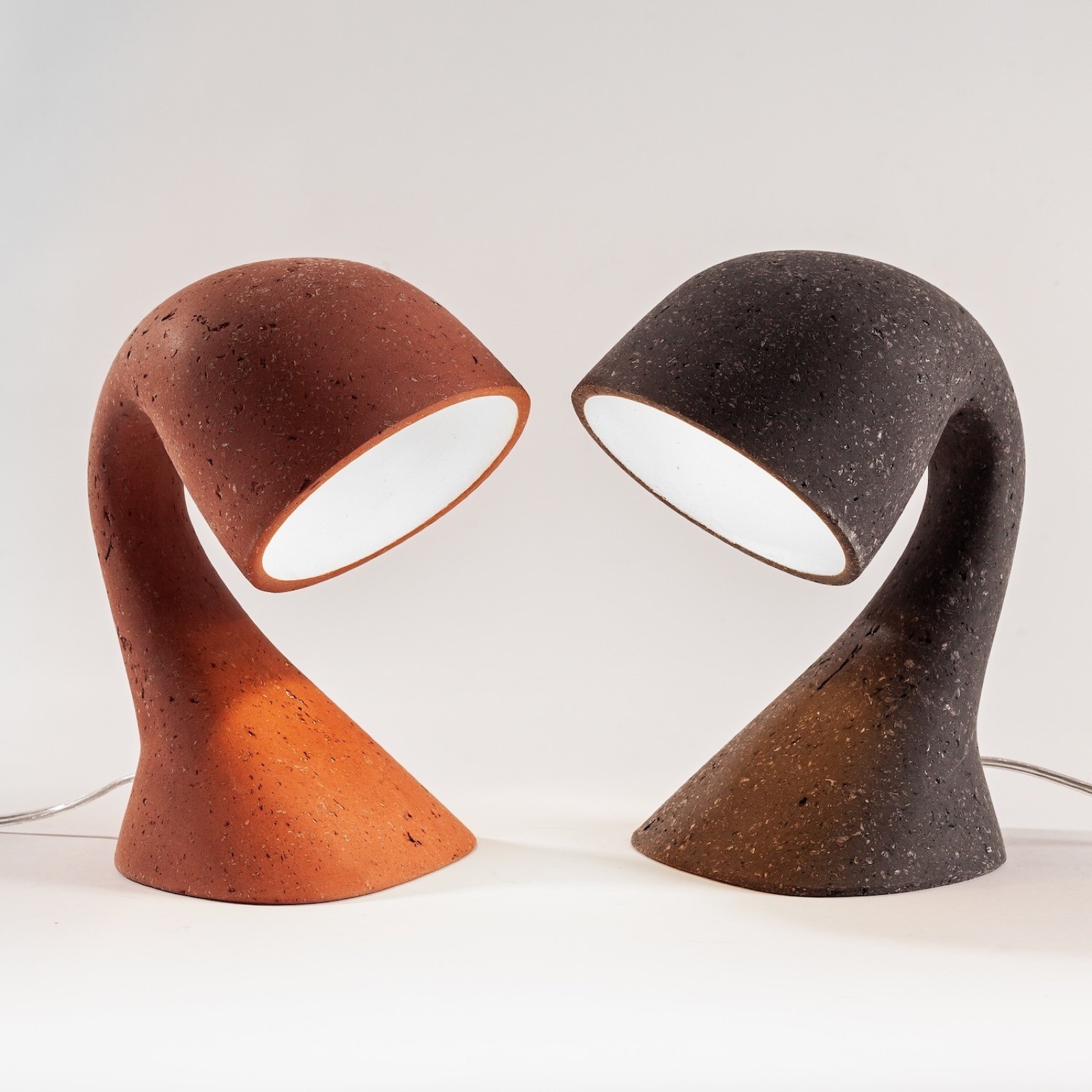
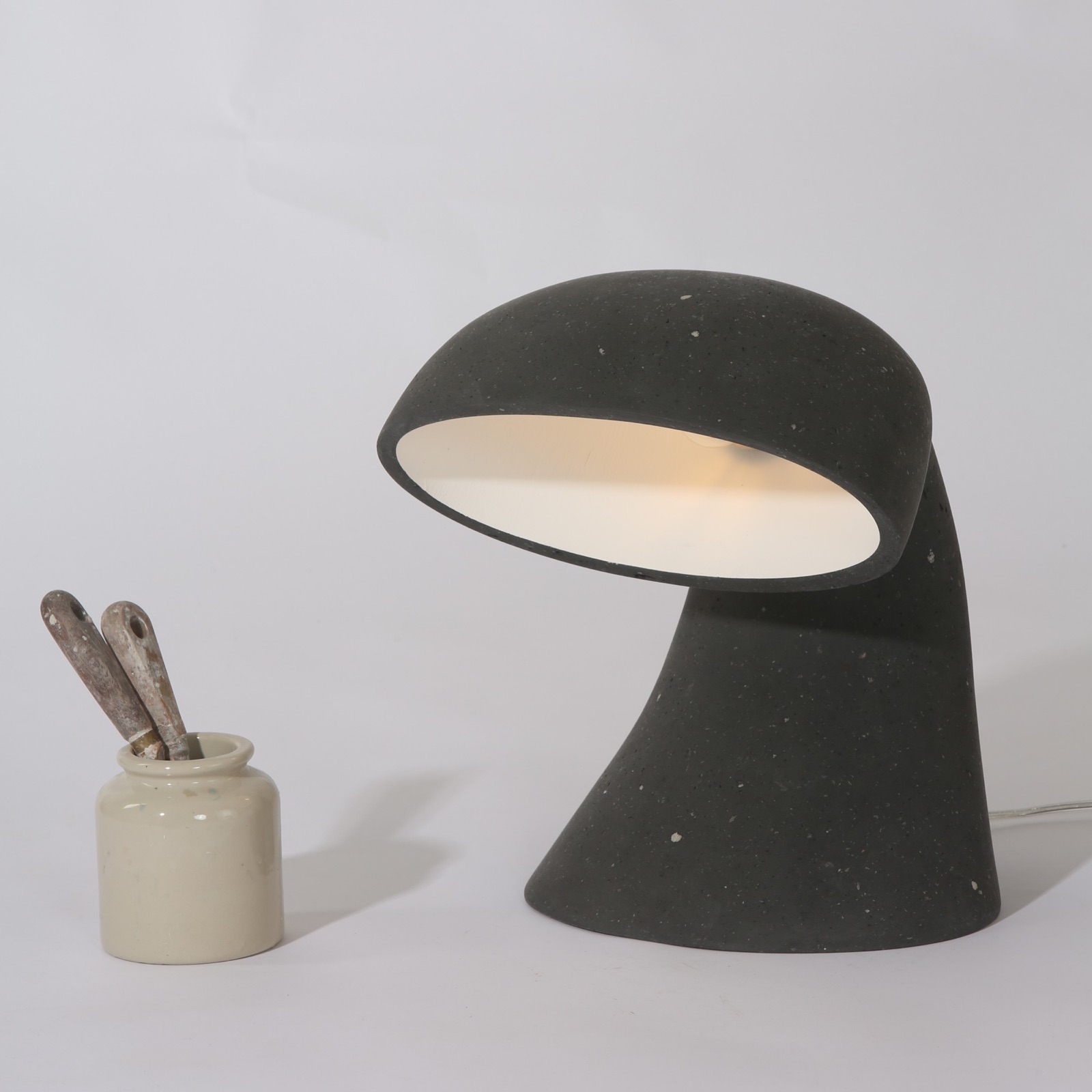
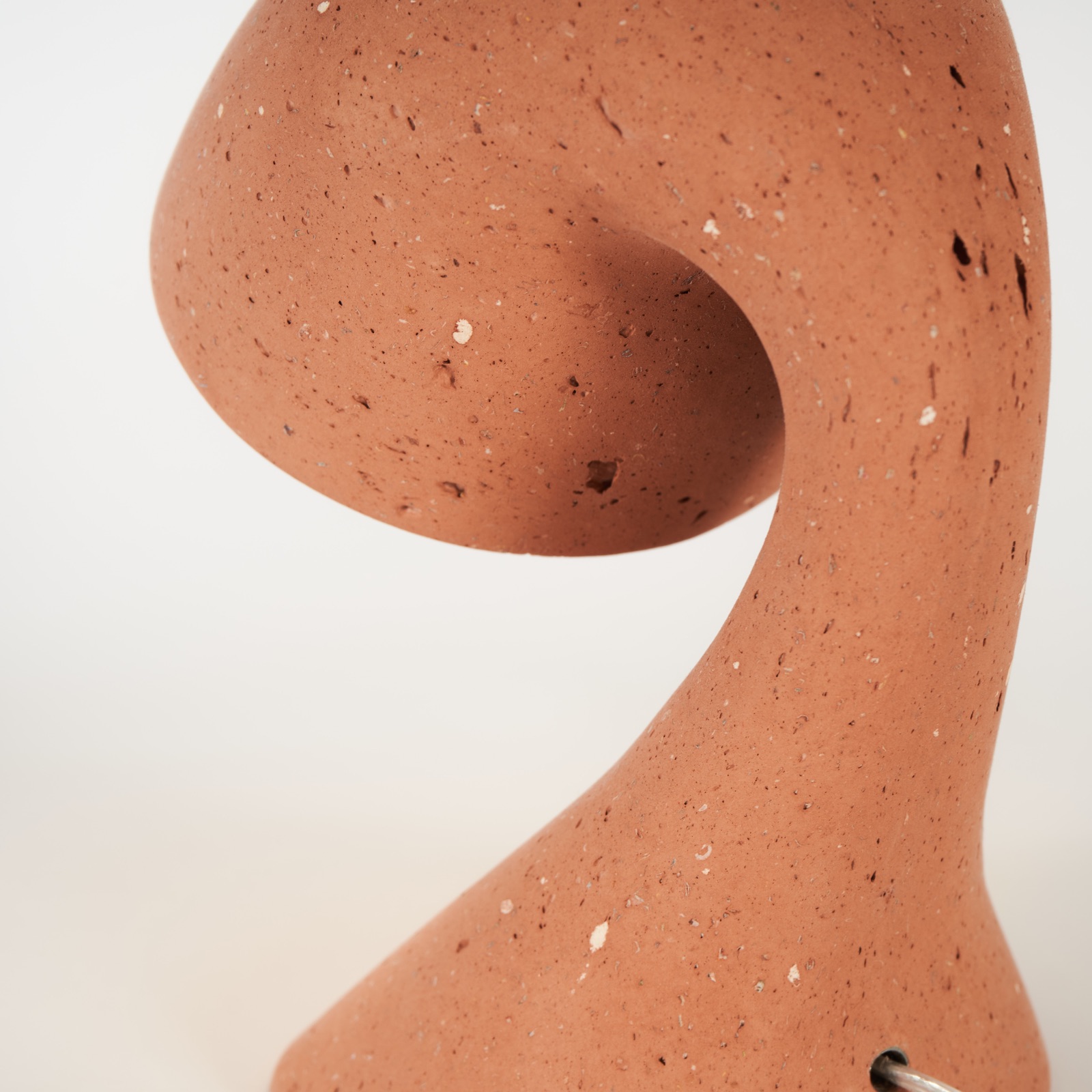
Mom and Sista
The most slender. Moulded from the inside: the hand goes into the mould, and the wall comes out thin and even.
Paps and Bro
Applied by hand over a male mould. The finish is rawer. The same shape, a different character.
Invider: from the English word invader, with a spelling mistake kept on purpose.
Coloured through the mass
Five colours, and any other
The pigments, ochres, mineral oxides and carbon black, are mixed into the paste. Sanding brings the colour out with the grain of the paper; beeswax deepens it.
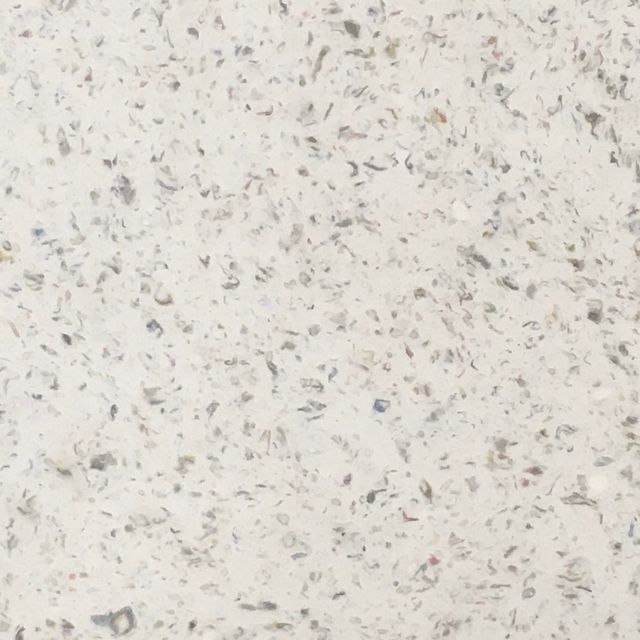
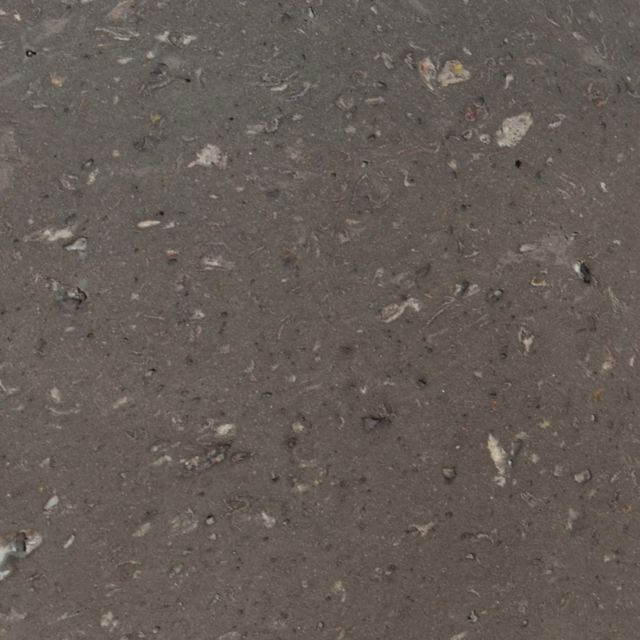
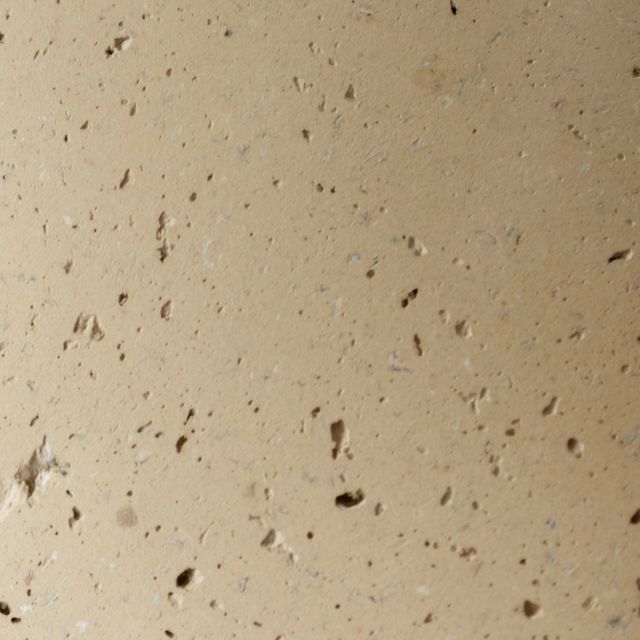
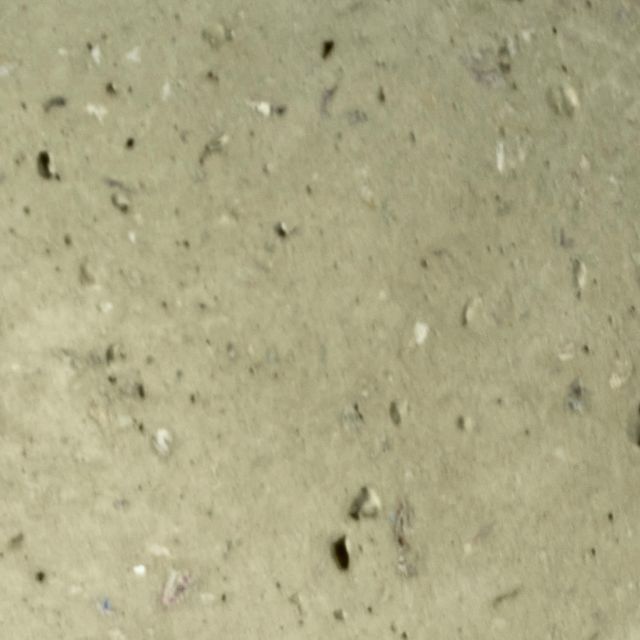
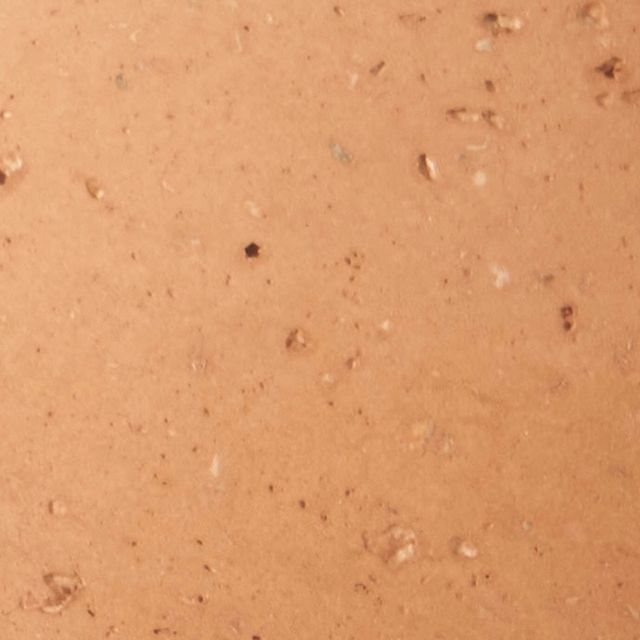
In the same paste
Furniture
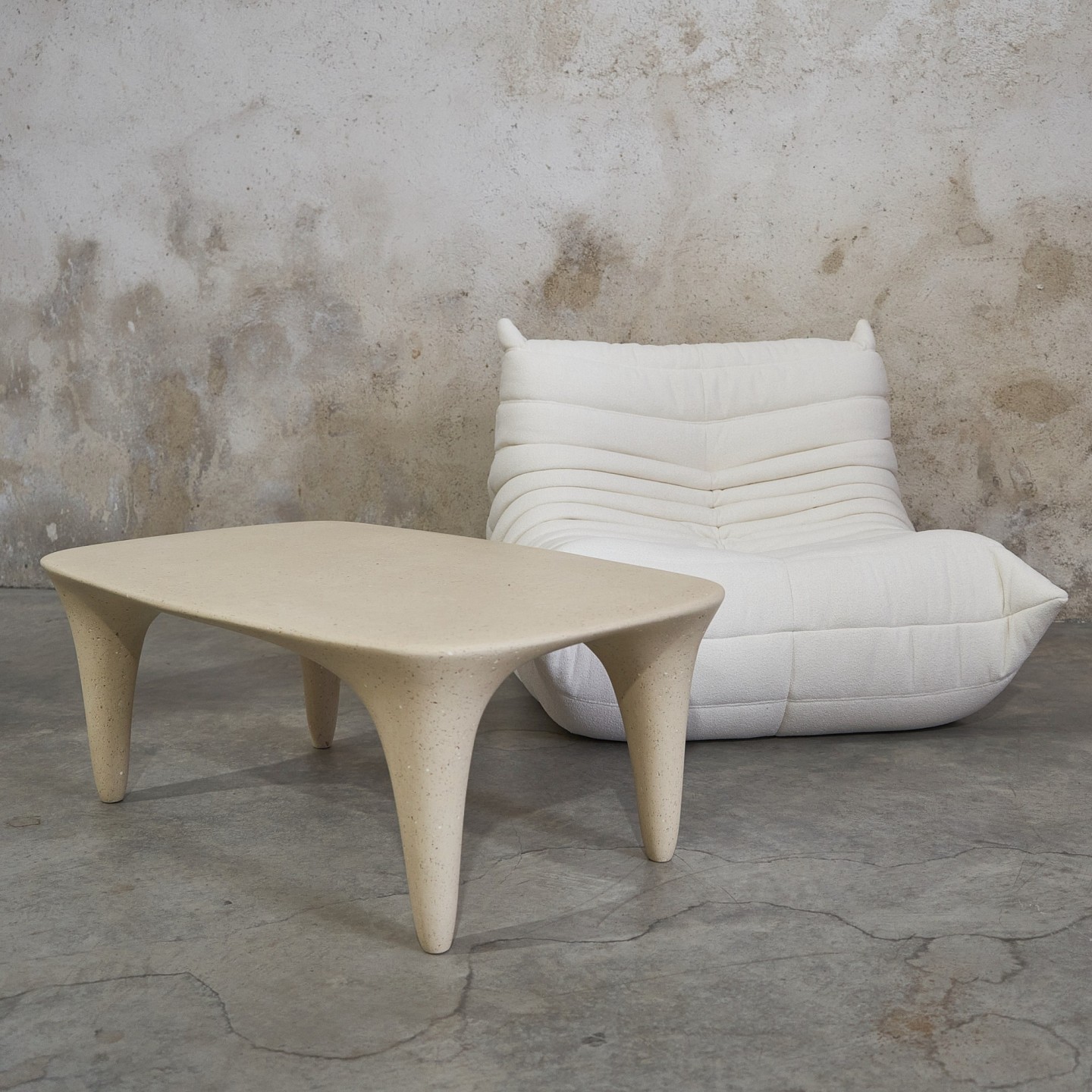
Petipié
Coffee table shaped by hand in France from recycled newspapers, plaster and plant-based glue. One metre long, thirty kilos, rounded edges and a varnish that coffee and wine do not mark.
- MaterialRecycled paper, plaster, plant-based glue
- DimensionsLength 100 cm • Width 60 cm • Height 40 cm
- Weight30 kg
- EditionHand-applied
- FinishWater-based varnish, EU Ecolabel
€1,920.00 Incl. VAT
See the piece“My son has bumped into it more than once. With its rounded edges, we’ve never ended up in A&E.”
From newspaper to lamp
The making, in five steps
Nothing here goes faster than the drying.
- 01The paperSalvaged newspapers, dry-ground near Béziers, to a grain chosen by Henri Dejeant.
- 02The pastePlaster, plant-based glue and pigments: the paste is mixed at the last moment, because it sets fast.
- 03The shapeApplied by hand so that no air is trapped, inside a mould, over a male mould or over a template.
- 04The dryingOnce out of the mould, the piece dries in a simply ventilated drying room, using as little energy as possible.
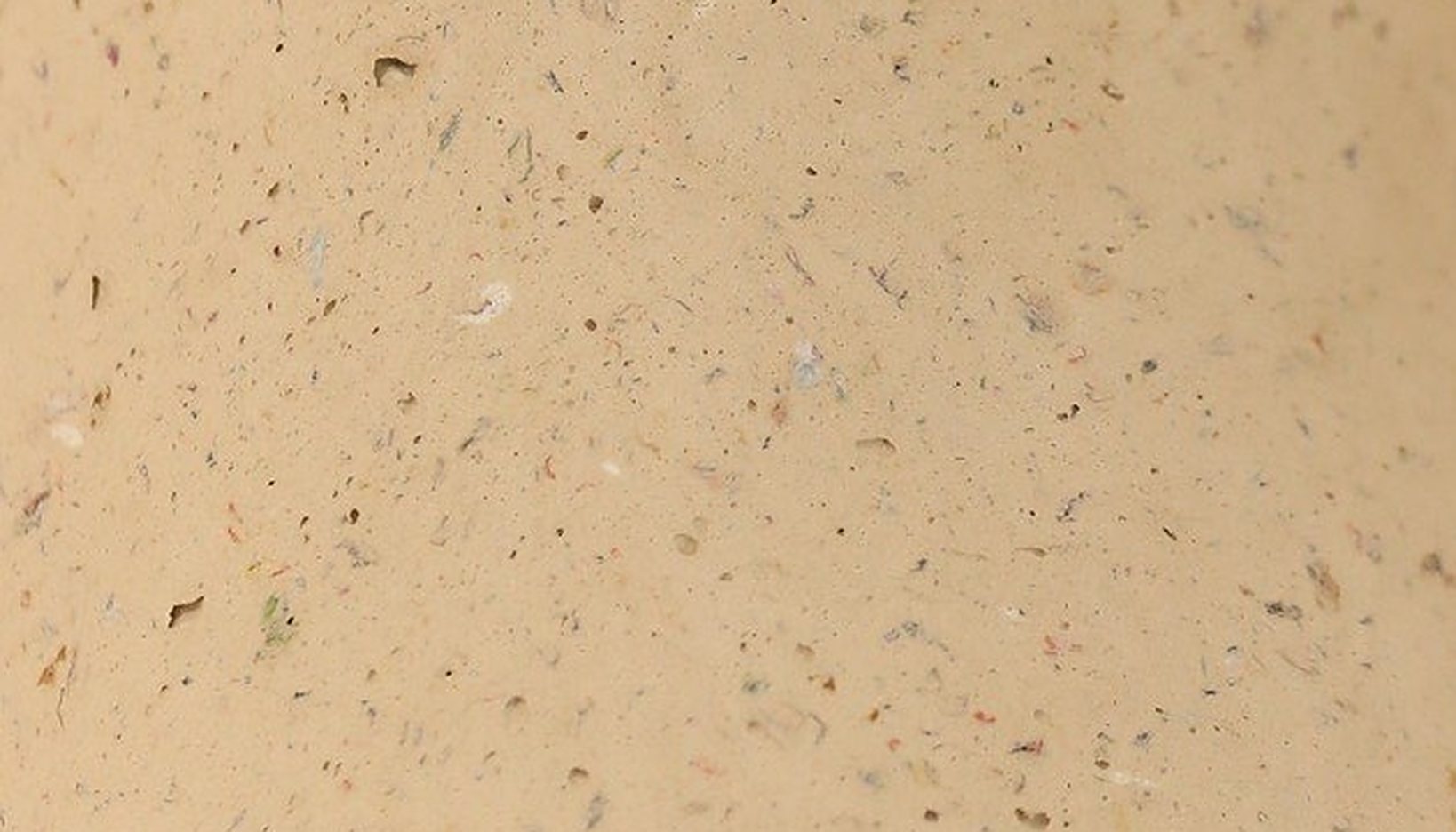
- 05The grain and the waxSanding reveals a terrazzo-like grain and flecks of newsprint. Beeswax revives the colour and hardens the surface.
In the notebook: papier-mâché, recycled paper, MoldingPulp, the seven steps in detail, a piece drawn for one place.
Instagram · @henri_dejeant
Latest news from the workshop


On request and made to measure
One-off pieces
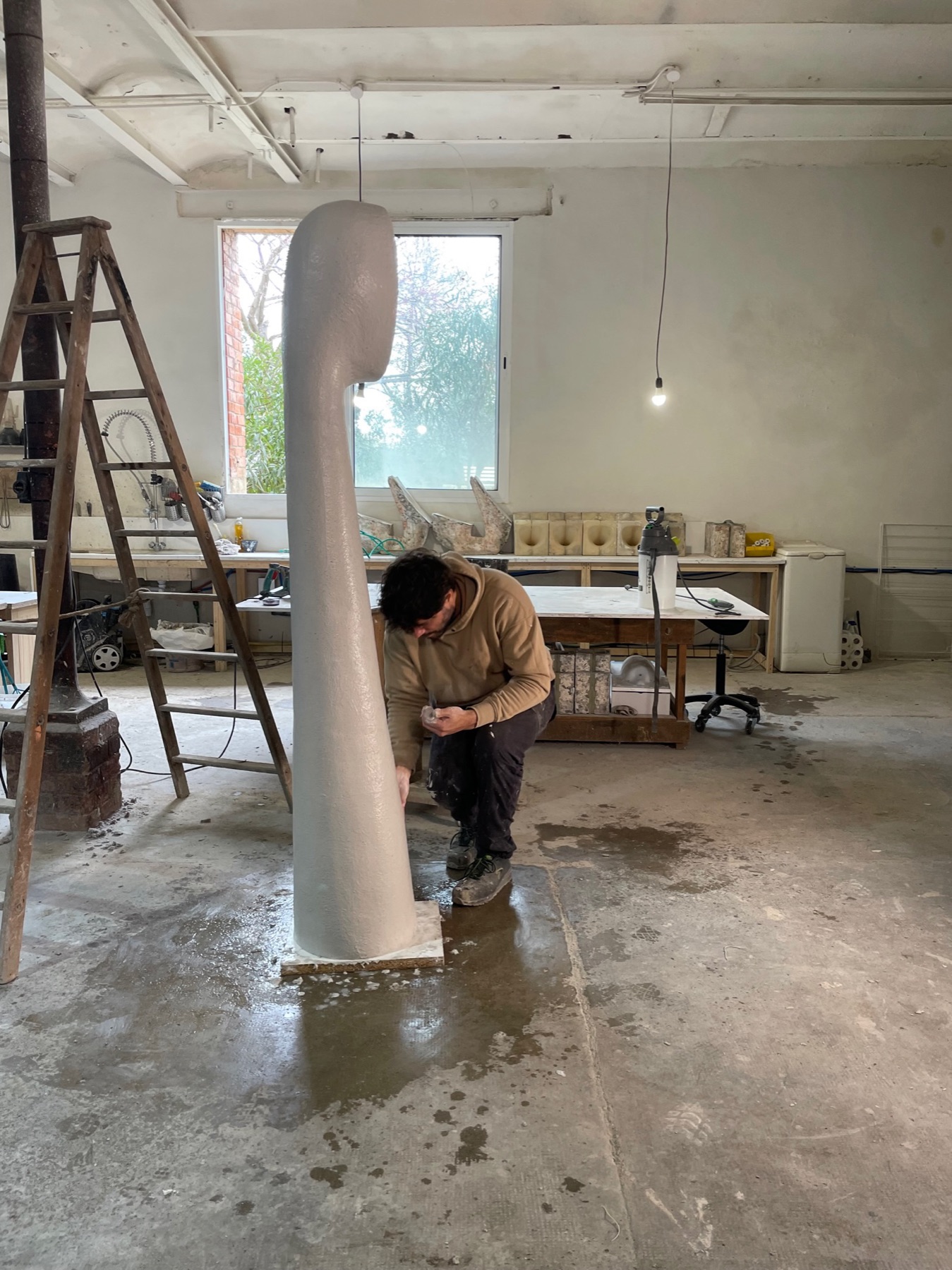
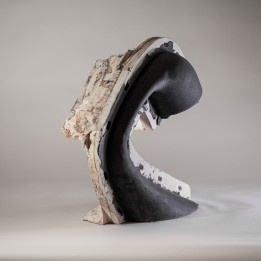
The Amba, “mother” in Sanskrit. From 95 to 200 cm, each one shaped for itself alone.
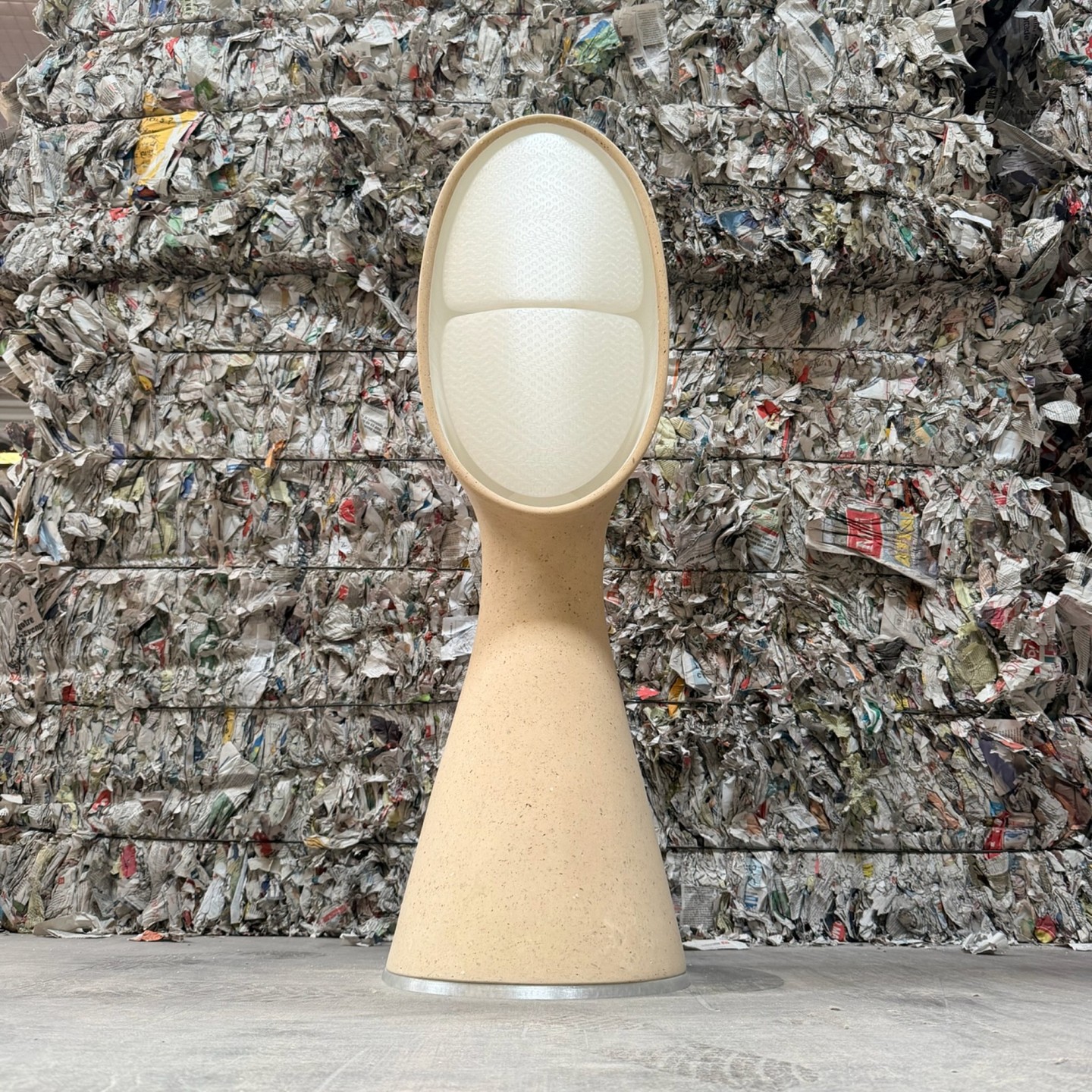
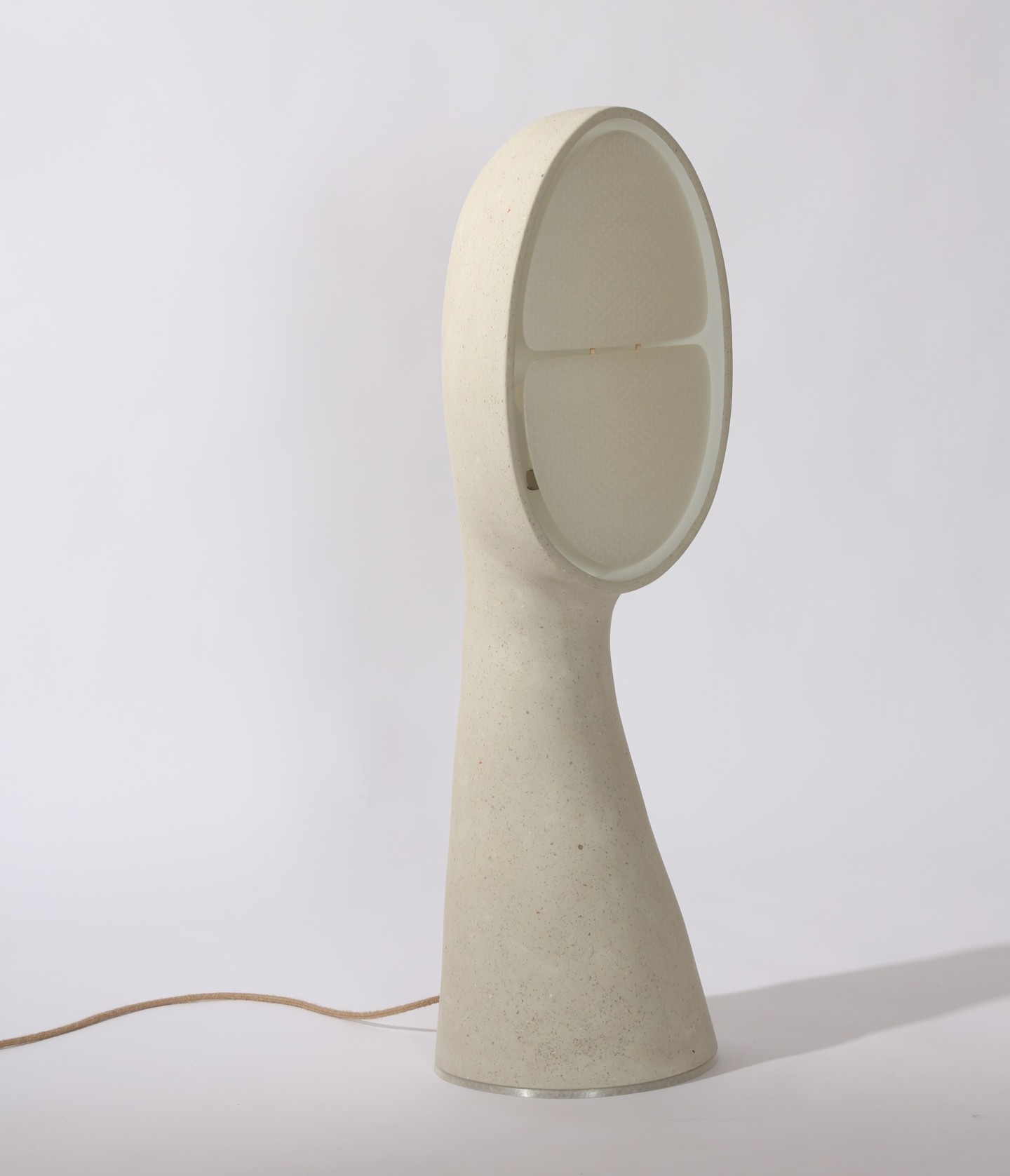
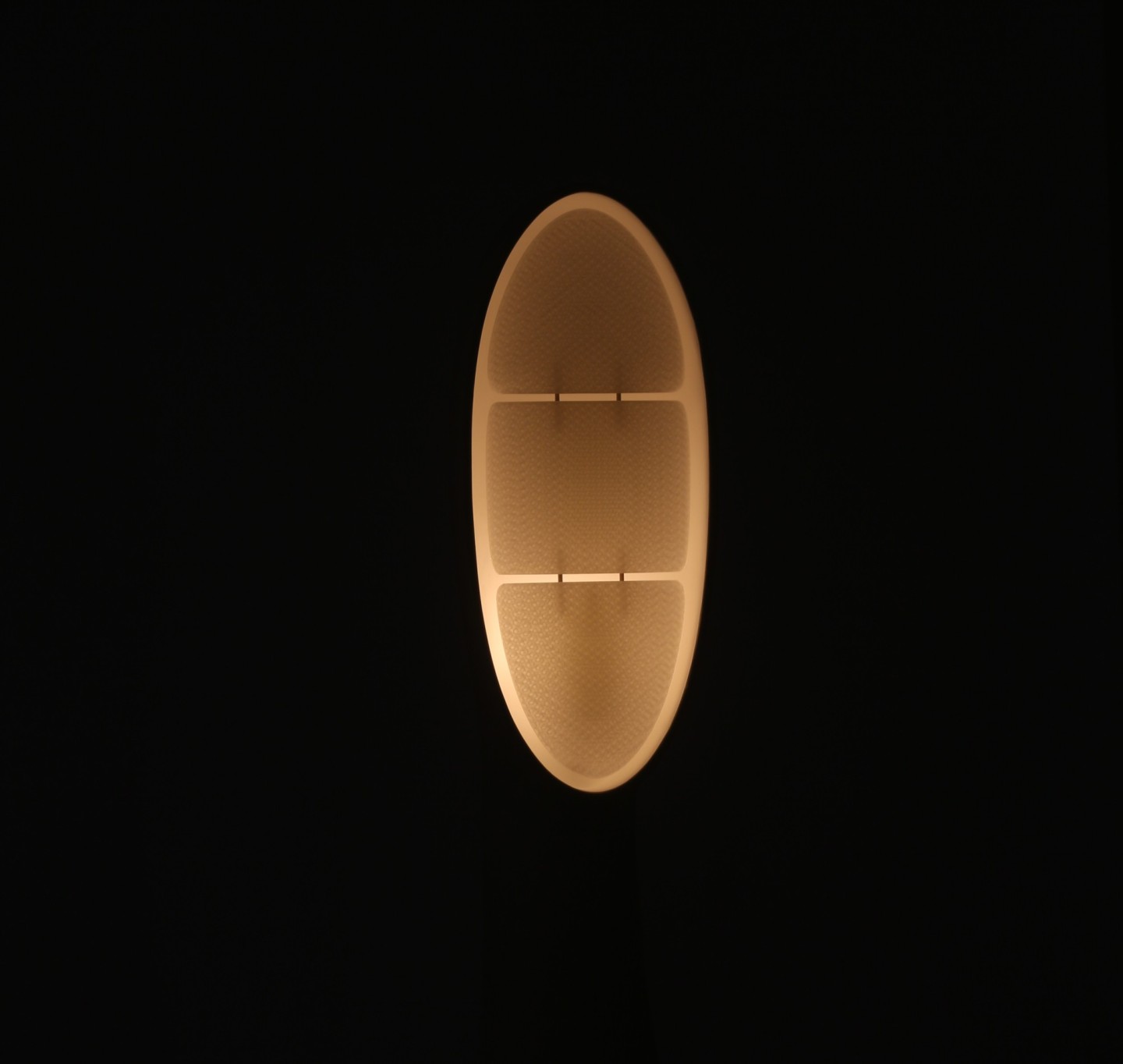
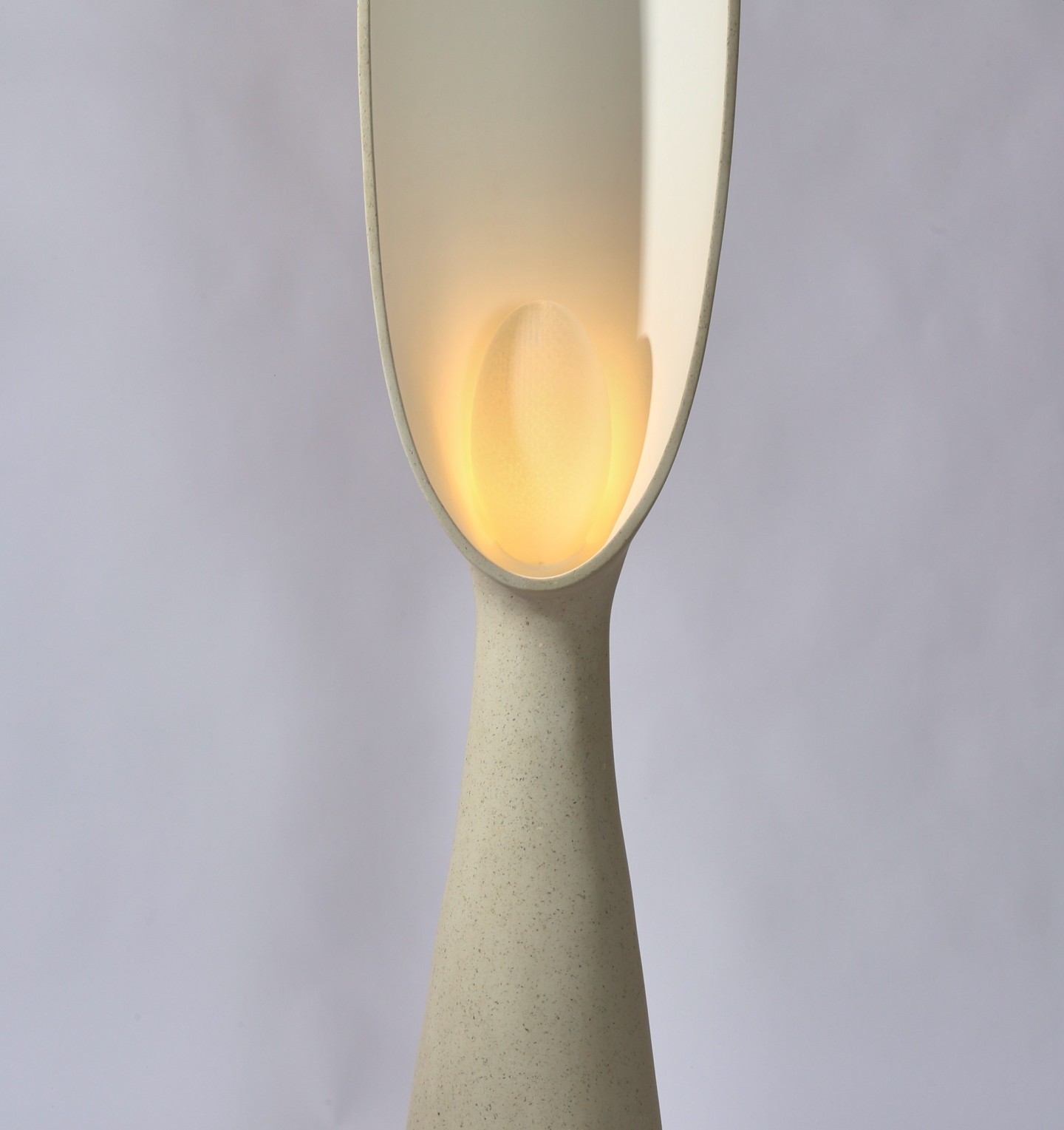
The paste is applied by hand, in thin layers, over a 3D-printed template made for a single piece, which is removed once the material has set. Then come the drying, the sanding and the finishing touches. Each diffuser is printed for its own lamp, on the theme of life and the feminine: a cell division, or an orchid.
“On these large shapes, applying the paste is almost a meditation. I take my time.”
The material
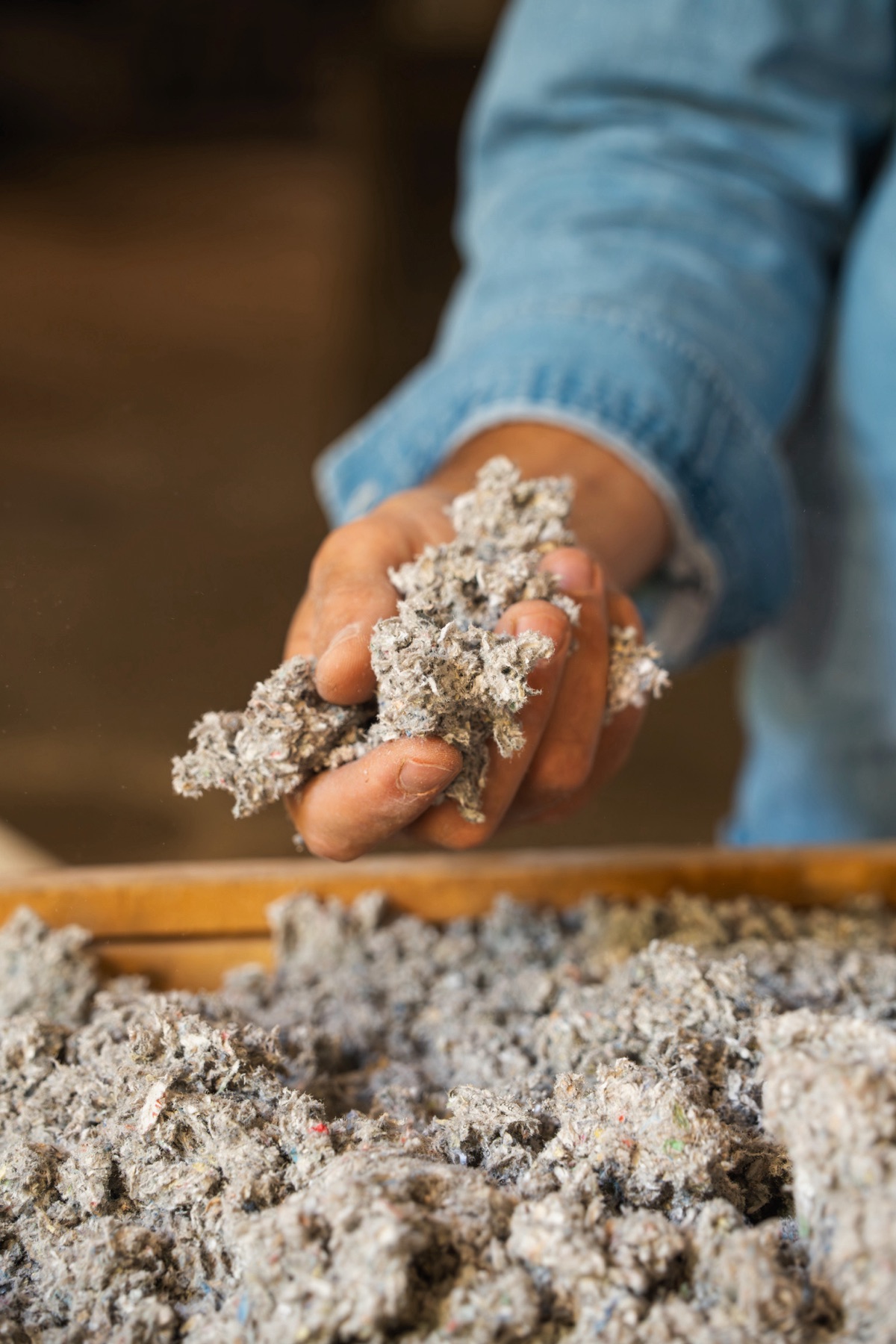
MoldingPulp, a material found nowhere else
Neither ceramic nor papier-mâché. Henri Dejeant developed it in Morocco, from newspaper, and has been refining it for more than fifteen years.
What is it made of?
Recycled newspaper, plaster made in France, a plant-based glue and mineral pigments. No resin, no plastic.
Is it sturdy?
Yes. The paper fibres reinforce the plaster, and the shapes, designed to spread the load, strengthen the piece.
And water?
A spilled glass is no disaster: a damp, well-wrung cotton cloth is all it takes. The lamps are made for dry rooms; the varnished coffee table doesn’t mind coffee or wine.
How does it feel?
Matt and soft, waxed with beeswax. Over the years a patina forms; the colour itself doesn’t change.
Where is it made?
In Béziers, in the former family mirror factory, from the first drawing to the packing.
Two identical pieces?
Never quite. Even the injected ones are sanded and waxed one by one.
Craft injection
The injected lamps
The technical side of the workshop: precise multi-part moulds, for small, consistent runs.
See Splitt and Kokiy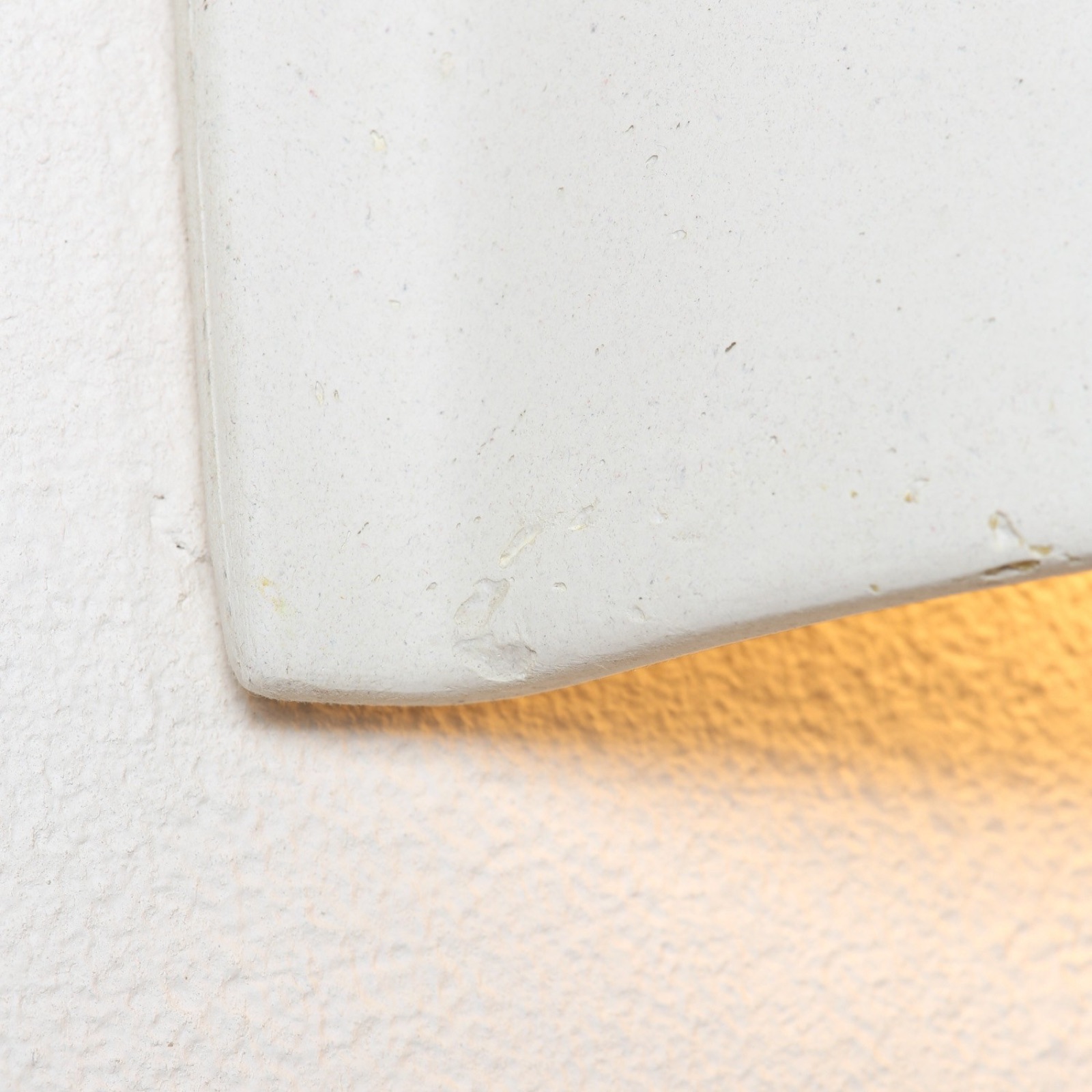
Splitt
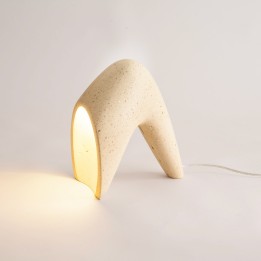
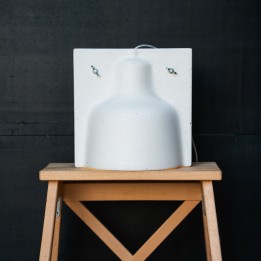
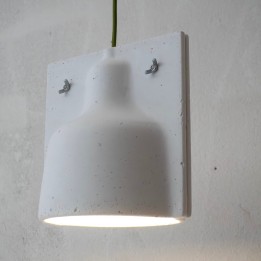
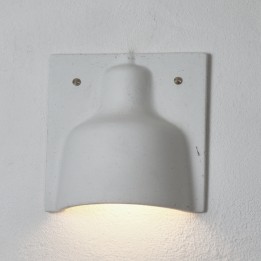
Two halves moulded separately, then joined. A more industrial look, as a pendant, a wall light or a clip-on lamp.
Kokiy
“Shell” in Creole. In the spirit of the Invider, but a shape too complex for the hand: it is vacuum-injected, then sanded and waxed.
Table, pendant and wall lights
The lighting
Google reviews
What customers say
5.0 out of 5 · 8 reviews
Reviews written in French, translated by the workshop.
“A fascinating workshop to discover, and a very warm welcome. I ended up falling for the Invider M in sage ✨ Gorgeous”
Frédérique A.
“Very happy with my lamp. The website is easy to use. Henri is very easy to reach through his Instagram account. I recommend him!”
Nicolas
“Superb lamp, we fell for two lamps and they are beautiful! Thank you Henri.”
Jerome K.
From Marrakech to Berlin
Where they’ve been seen
Hotels in Paris and the South of France, Paris department stores, and these shops.
“With their biomorphic features, the Invider lamps take on a living quality that Henri instils in them as he makes them.”
Journal du Design
“An otherworldly table lamp catches our eye: curved, plant-like forms.”
Remodelista
“Henri Dejeant turns matter into luminous poetry.”
La Maison Pigalle
Hotels, shops, architects, studios
A project, a series, a piece to invent.
Henri Dejeant considers every project, with no minimum quantity: a series for a hotel, a colour for a shop, a model designed by a studio or with him. Allow up to three months for a new piece.
The newsletter
New pieces, before anyone else.
A few letters a year: the pieces coming out of the drying room, new shapes, trade fairs. Nothing else.