The workshop colours: the colour is in the material
Colour is not laid on my pieces, it is in them. The pigments are mixed into the paste before moulding: a scratch therefore never reveals another material underneath. Here are the five colours of the workshop, and what sets them apart.
The principle
How colour goes into the material
I use mineral pigments: ochres, oxides, carbon black. They are mixed into the paste as it is prepared, so the colour runs through the mass. Nothing is painted, nothing is sprayed.
The colour only really appears when the piece is sanded and the surface opens to show the grain. The beeswax that follows deepens it — that is the step where a grey piece becomes a coloured one. The detail is in the seven steps.
Permanent
Natural paper and carbon black
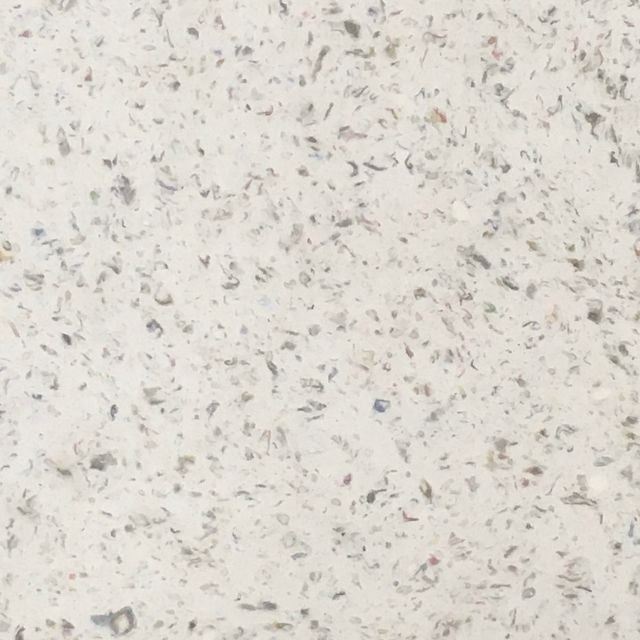
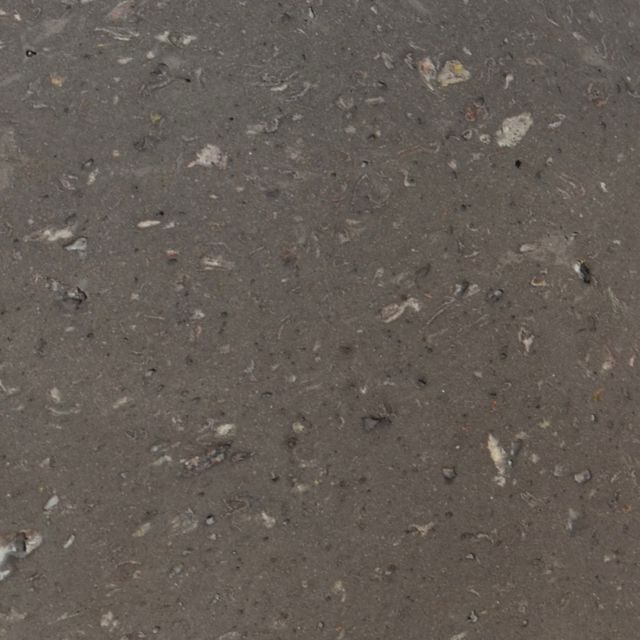
Natural paper is the material without pigment: a pale beige where the ink flecks show best. It is the colour that tells most honestly what the piece is made of.
Carbon black is at the other end: dense and matt, where the grain is sensed rather than seen. Both are permanent, always available.
Current
Sage, ivory, brick
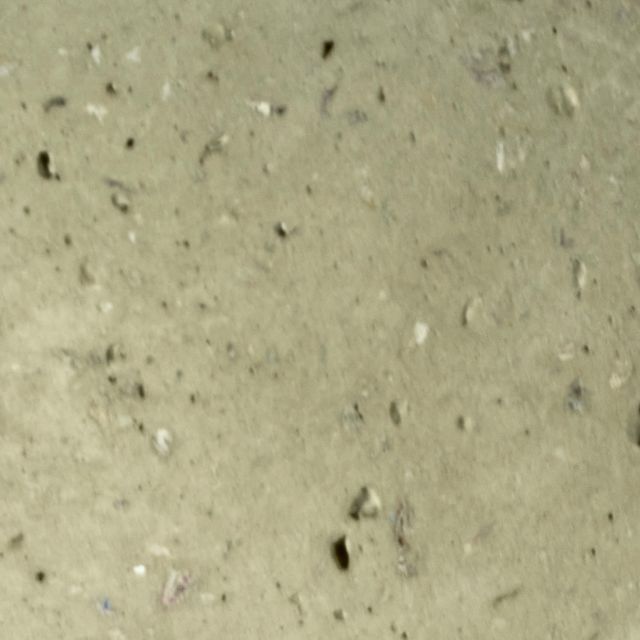
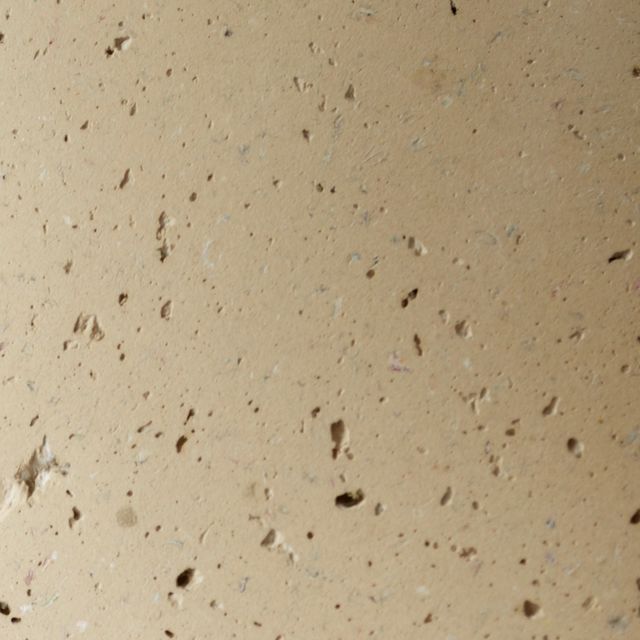
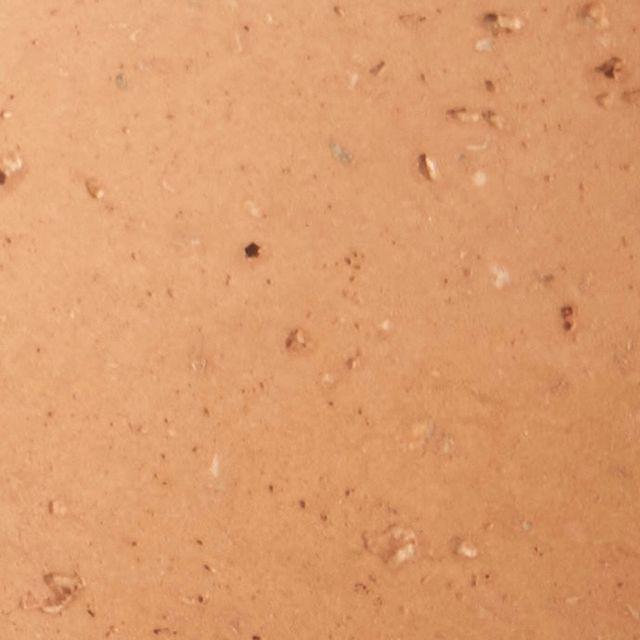
These three are limited editions: I prepare them in batches, and when a batch is finished it does not necessarily come back. Sage is a greyish green that sits well with pale woods; ivory warms a white room without yellowing it; brick leans towards terracotta without its sheen.
On request
A colour that answers a wall
Any other colour can be prepared. It is the most frequent request from architects and hoteliers: a colour that goes with one particular place, sometimes across a run of identical pieces. A photograph of the wall and the floor is enough to start — the rest is settled with a sample. It is the same path as for a particular size: a piece drawn for one place.
Over time
What the colour becomes
The colour does not shift: mineral pigments do not fade in the light. What changes is the surface — a patina forms where the piece is handled, and it darkens slightly. A small chip can be touched up, precisely because the colour is in the mass and not on the surface.
To work out which colour goes where, the logic is the same as for shape: choosing a lamp room by room.